
October 8, 2026
Open Shelving vs. Upper Cabinets: The
Introduction
Walk into any small kitchen design showroom and you’ll see it: those beautiful floating wooden shelves, perfectly styled with ceramic bowls, a single trailing plant, and matching glass jars. It looks effortless. It looks airy. It looks like the answer to every small kitchen problem.
Then you look at your own kitchen—where the Tupperware lids are staging a rebellion and you have three half-used bags of flour—and you wonder if those shelves are really for you.
This is the great debate: open shelving vs. upper cabinets in a small kitchen.
Both have passionate defenders. Both have real drawbacks. And both can work beautifully—if you choose based on how you actually live, not how you wish you lived.
In this guide, I’ll break down the honest pros and cons, the real cost differences, the maintenance reality, and a hybrid approach that most designers actually recommend. No hype. No Instagram fantasy. Just practical advice for real small kitchens.
The Core Question: What Are You Really Choosing?
Before comparing shelves and cabinets, understand what you’re actually deciding.
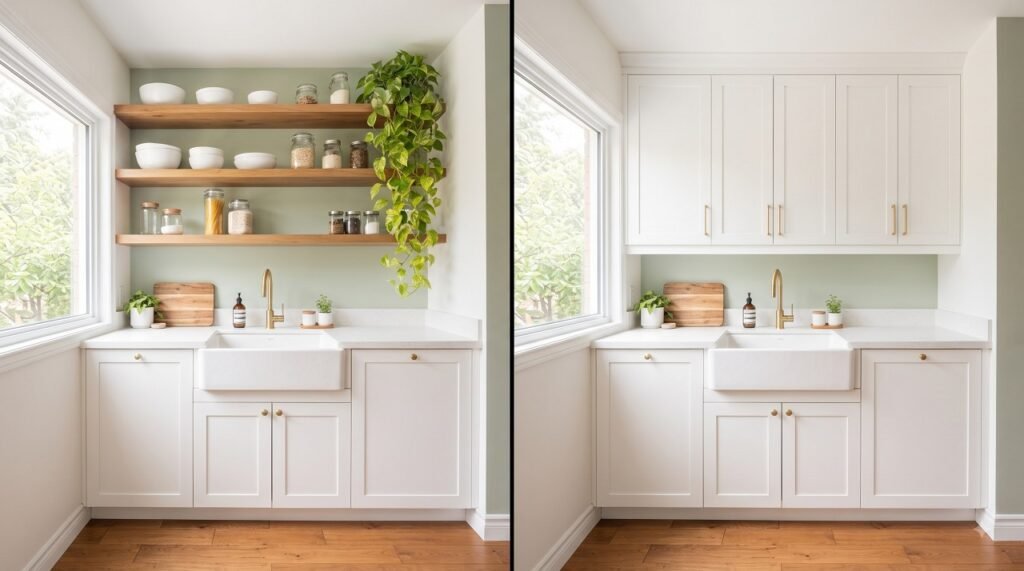
Upper cabinets are enclosed storage units mounted above the counter. Standard depth is 12 to 14 inches, and they run from the counter to near the ceiling—or stop partway up. They hide everything behind a door: mismatched plates, the blender you use twice a year, the plastic containers that have lost their lids.
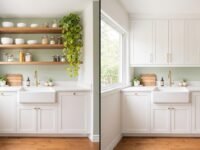
Open shelving replaces those enclosed units with exposed shelves. Everything on them becomes part of the room’s visual design. Standard shelf depth is 8 to 12 inches, often shallower than cabinets-. They’re typically wood, metal, or glass, and they’re mounted directly to the wall.
The core difference isn’t just aesthetics. It’s about concealment versus display:
- Upper cabinets prioritize protection and concealment. They keep items free from dust, grease, and daily mess. They let you store things purely for convenience without worrying about how they look-43.
- Open shelving prioritizes visual openness and easy access. They make everything part of the design, which means what you store there needs to look intentional, not just functional-43.
That single distinction drives every other trade-off in this debate.
The Case for Open Shelving in a Small Kitchen
Open shelving has become the go-to recommendation for small kitchens, and there are legitimate reasons for that.
1. Visual Space and Airiness
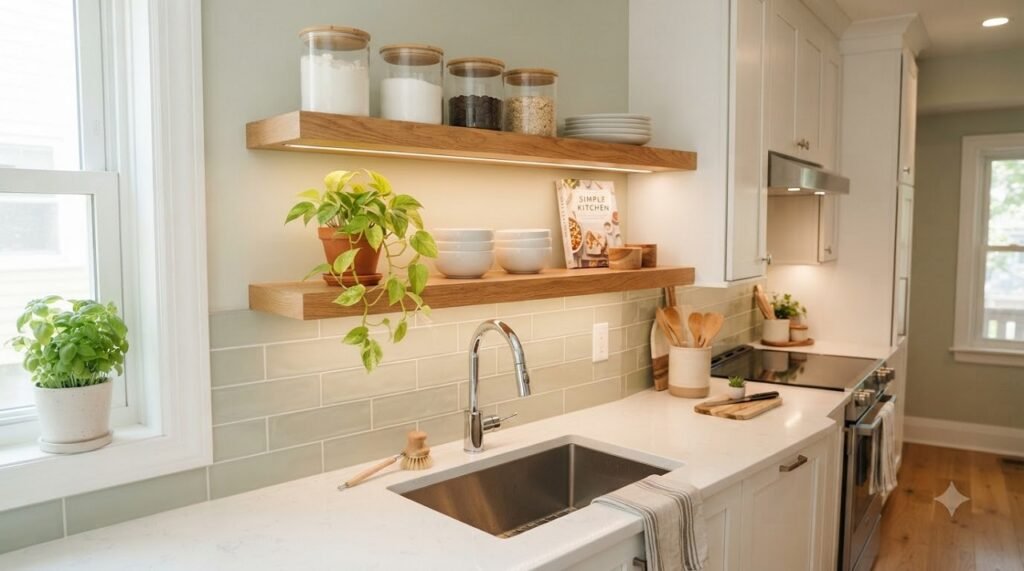
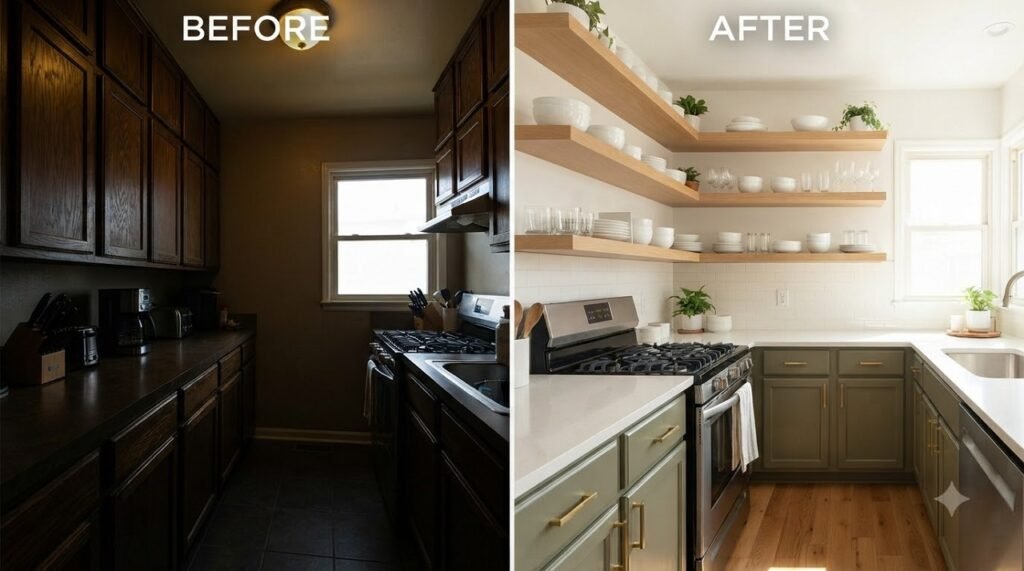
Standard upper cabinets are 12 to 14 inches deep. When you have two rows of them facing each other in a small kitchen, the room can feel like a tunnel-6. Open shelving gives that visual space back. It pulls the walls back and lets light hit the backsplash. It makes a small kitchen feel like it has room to breathe-6.
A real-world example from a designer’s project: a homeowner with a 10×10 kitchen felt claustrophobic every morning. Swapping the heavy uppers for thick oak floating shelves meant the morning sun actually reached the stove. It changed the mood of the entire space-6.
2. Lower Cost
Open shelving is generally cheaper than upper cabinets. You’re not paying for doors, hinges, and the labor to install them. One designer used this on a rental flip—they saved on custom cabinet doors and the client loved the airy feel-1. The downside, of course, is that shelves need styling and frequent dusting.
3. Easy Access
Everything is visible and within reach. No opening doors, no digging behind stacks of plates. For everyday dishes, coffee mugs, and spices you use constantly, this is genuinely more convenient.
4. Display Opportunity
Open shelves let you turn your kitchen into a curated space. Cookbooks, ceramics, framed prints, a favourite mug from your travels—these become part of the room’s character rather than hidden away-12.
The Case for Upper Cabinets in a Small Kitchen
Upper cabinets exist for good reason, and in a small kitchen, those reasons get stronger, not weaker.
1. Maximum Storage Volume
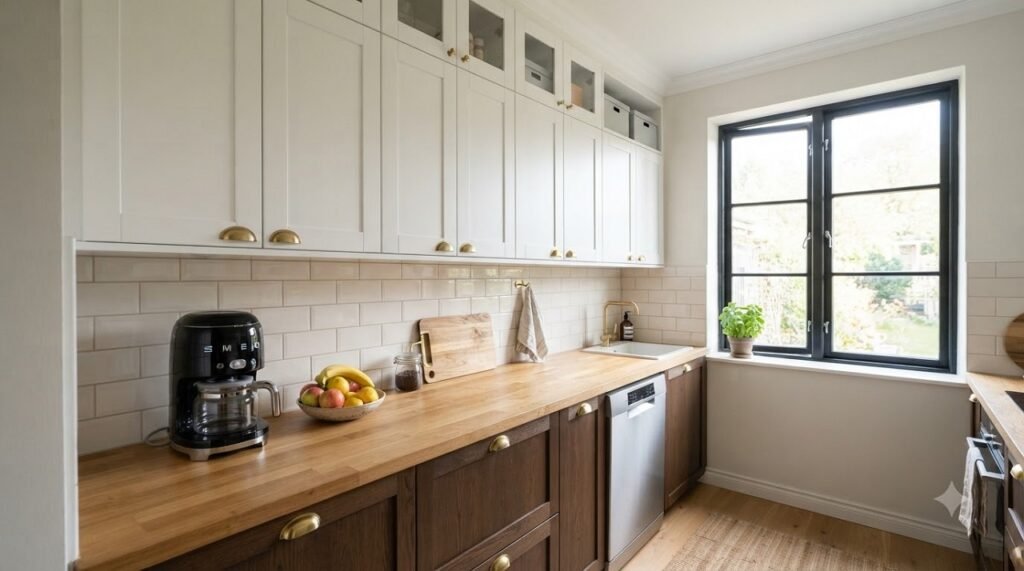
This is the most important point, and it’s often glossed over in design blogs. In smaller kitchens, upper cupboards provide storage volume that cannot easily be replaced elsewhere through open shelving or decorative alternatives-21. A full run of floor-to-ceiling cabinets on one wall is almost always more storage-efficient than eliminating uppers in favour of open shelving-21.
Open shelves typically hold far less. They’re shallower (8–12 inches vs. 12–14 inches), and you can’t stack items as high because everything needs to look presentable. In a 5×5 or 10×10 kitchen, that lost storage is significant.
2. Protection from Dust and Grease
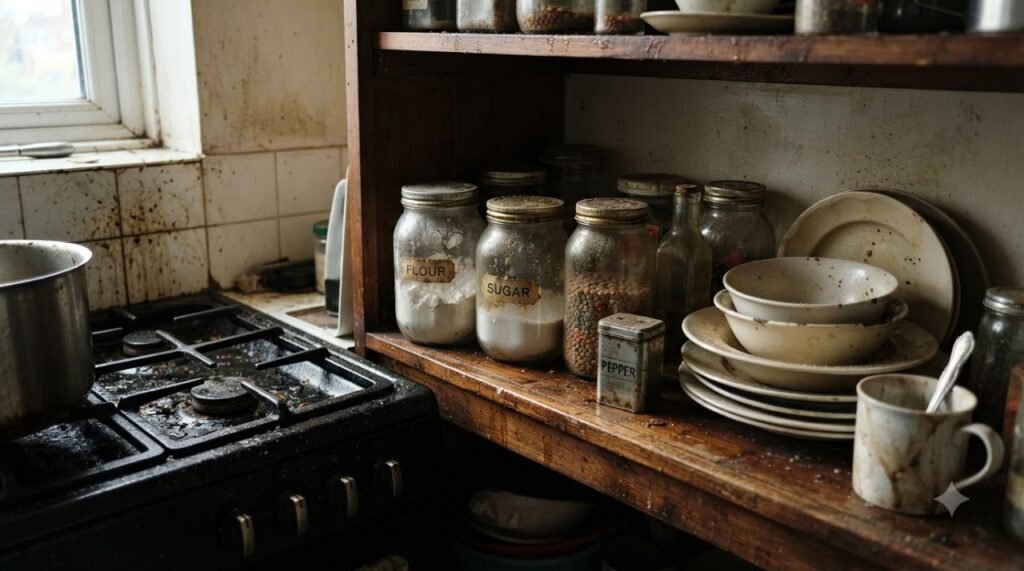
This is the reality check. If you have shelves, you have dust. And because it’s a kitchen, you don’t just have dust—you have kitchen dust, which is essentially dust mixed with a fine mist of cooking oil-6.
Items placed on open shelving get dusty and greasy with cooking oils. Even if you’re regularly using the crockery on the shelves, they will gather dust more quickly than if they were stored in closed cabinetry-39. Worse, if you cook every day and don’t have a strong extractor fan, grease accumulates on everything near the stove. One designer had a friend who insisted on open shelves next to her range. Her “decorative” white plates turned a yellow-grey from bacon grease. She eventually called to install cabinets because she was tired of constant scrubbing-6.
Upper cabinets act as a shield. They keep your holiday platters and that fondue set you use once a year perfectly clean until you need them-6.
3. Concealment of Clutter
Open shelves make everything part of the design. If your dishes are mismatched or your storage containers are chaotic, that’s on display. Upper cabinets let you store items purely for convenience without worrying about how they look-43.
4. Resale Value
This is controversial, but the evidence leans against open shelving everywhere. Real estate professionals consistently list “open shelving everywhere” as a feature that can lower a home’s value. Open shelves can look charming in a magazine, but unless buyers have a passion for organization and dusting, they may run at the lack of hidden storage-. One expert noted that removing upper cabinets or reducing storage space can be a dealbreaker for many buyers. Kitchens need to be functional, and storage is a top priority-.
The Honest Truth: What Nobody Tells You
Here’s what design magazines don’t emphasize enough:
Open shelving in a kitchen accumulates grease and dust at a rate that closed cupboard fronts do not. The kitchens where open shelving works long-term are those used by people who genuinely maintain them—which is fewer households than the design magazines suggest-21.
This isn’t a reason to avoid open shelving entirely. It’s a reason to be honest about whether you’ll actually maintain it.
Ask yourself: Will you wipe down every item on those shelves weekly? Will you keep them styled and clutter-free? If the answer is “probably not,” closed cabinets are the smarter choice.
Open shelving is a design decision that requires a lifestyle commitment. It’s not just a look. It’s a habit.
Side-by-Side Comparison: The Real Numbers
| Factor | Open Shelving | Upper Cabinets |
|---|---|---|
| Storage capacity | Limited (shallower, must be styled) | Maximum (hides the mess) |
| Visual space | Expands the room, airy | Can feel heavy or tunnel-like |
| Cleaning frequency | Frequent (dust/grease on every item) | Occasional (just the doors) |
| Accessibility | Very high (grab and go) | Moderate (must open doors) |
| Cost | Generally lower | Generally higher |
| Clutter concealment | None | Complete |
| Resale impact | Mixed to negative if overused | Neutral to positive |
| Best for | Display items, daily-use dishes, airy look | Hiding clutter, maximizing storage |
Source: Ace Kustoms kitchen comparison-6
The Hybrid Approach: The Best of Both Worlds
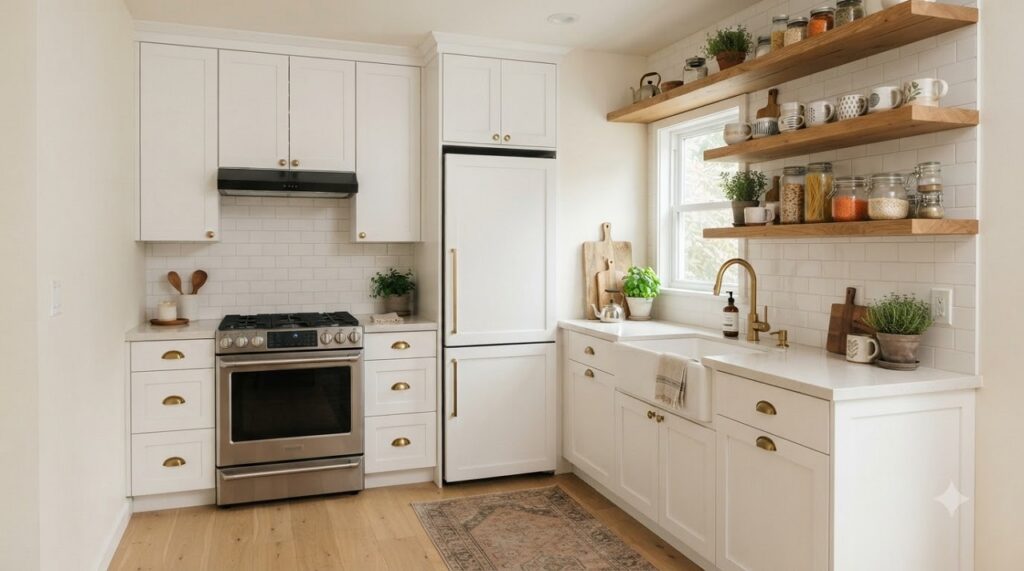
Most designers don’t recommend choosing one or the other exclusively. They recommend a hybrid approach.
The Designery, a kitchen design firm, puts it clearly: “The right answer usually isn’t one or the other exclusively, but understanding what each actually does well before deciding where to use them”-43. Both options can work beautifully—the key is matching the choice to your storage habits, your maintenance tolerance, and the specific areas of your kitchen-43.
How to Structure a Hybrid Kitchen
Use upper cabinets for:
- Heavy, bulky items (pots, pans, small appliances)
- Items you use infrequently (holiday platters, specialty bakeware)
- Anything near the stove or sink (where grease and splatter are worst)
- Pantry items and dry goods
Use open shelving for:
- Daily-use dishes and mugs (easy access, and you’ll rotate them often enough to keep them clean)
- Display pieces (cookbooks, ceramics, a favourite vase)
- Areas away from the stove and sink—lower-traffic, lower-grease zones-43
- A single feature wall or a section above a coffee station
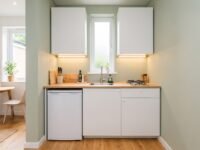
The balance: In a studio renovation, one designer kept upper cabinets over appliances and switched to open shelves above the sink, which visually lifted the ceiling and made the kitchen feel twice its size-. This is the hybrid sweet spot—cabinets where you need concealment, shelves where you want openness.
Where to Use Open Shelving (And Where Never To)
✅ Good Spots for Open Shelving
- Above the sink or prep counter (away from the stove, high visibility, items rotate frequently)
- On a feature wall alongside closed cabinetry, as an accent rather than the dominant storage-43
- Near a coffee or beverage station (mugs, jars, glassware—all lower-maintenance items)
- At the end of a run, where a full cabinet would block light or sightlines
❌ Spots to Avoid Open Shelving
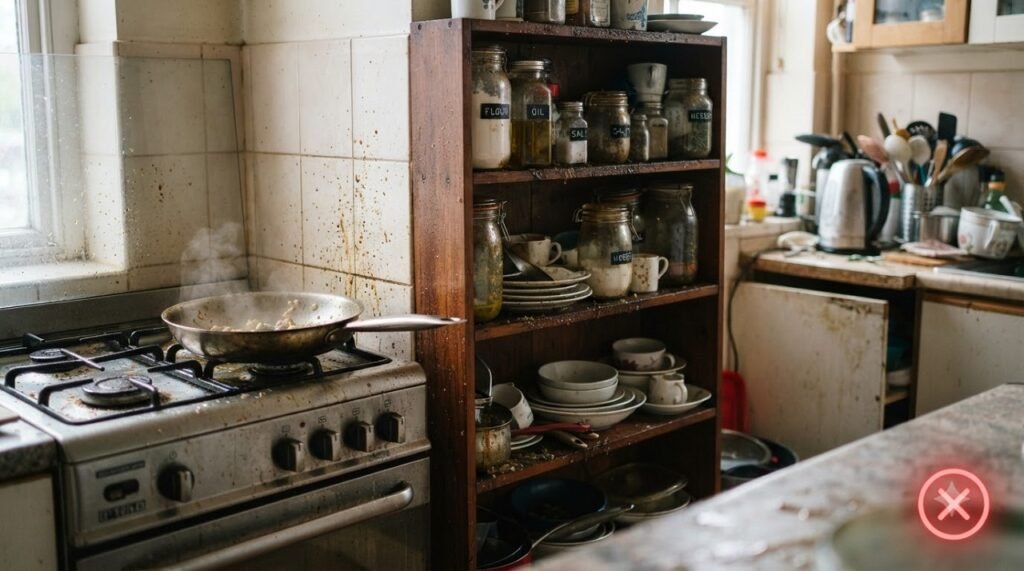
- Directly beside or above the stove. This is the single worst location. Grease and splatter will coat everything. One designer noted her friend’s white plates turned “yellow-grey from bacon grease” after months near the range-6.
- Over the dishwasher or sink if you use heavy splashing, though shelves above a sink are less problematic than near a stove
- Anywhere you need to store bulky or unattractive items. If it needs to be hidden, it needs a cabinet.
Styling Open Shelves So They Don’t Look Cluttered
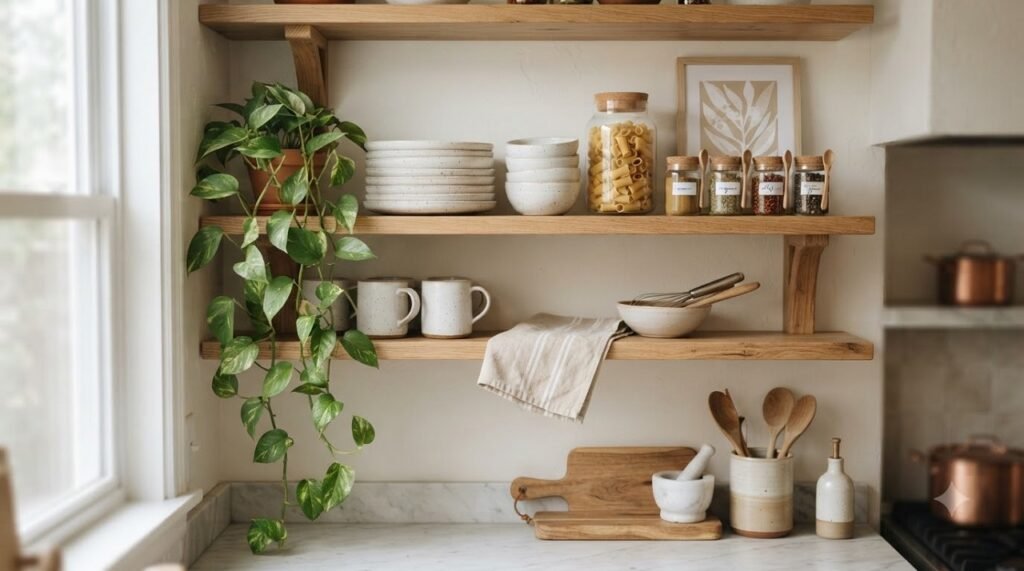
If you go with open shelving—even partially—styling is everything. A cluttered shelf defeats the purpose.
The Rules of Styling
- Stick to glassware, ceramics, or spices. Cereal boxes should stay far away. Style items evenly, the way you would a bookshelf. If it’s smaller than a grapefruit, it probably doesn’t belong-57.
- Use matching containers. Switching to a set of glass jars or matte ceramics makes everything instantly cohesive-58.
- Layer at different heights. Stack plates, prop up chopping boards vertically, or lean framed prints against the wall to arrange items at different heights-.
- Leave some empty space. Balance is key. Leave gaps so the eye can rest-.
- Mix old and new, and choose a small colour palette. Different shapes and heights sitting next to each other create visual interest-.
- Integrate lighting. Under-shelf LED strips make everything look more intentional, even simple mugs-58.
What the Designers Are Saying in 2026
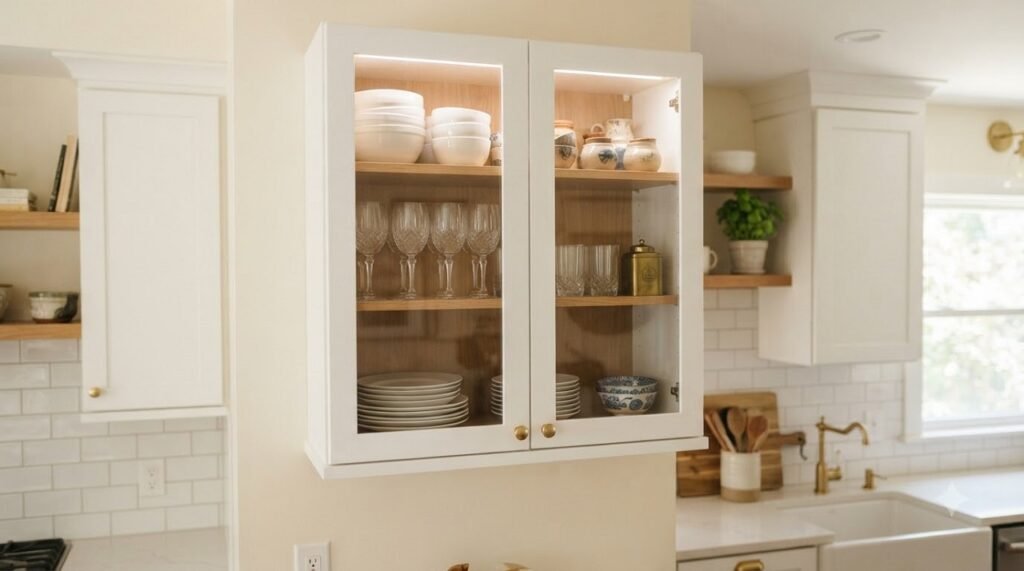
The open shelving conversation has shifted. In 2026, the trend is more restrained and intentional. Designers agree that expansive open shelving—walls lined with long, continuous shelves—is a thing of the past-.
“The trend is shifting toward curated, built-in moments that feel architectural and purposeful,” says Natalia Lerman, founder of Lerman Designs. “It isn’t ‘no open shelving,’ but rather ‘less, but better’ open shelving—shelves that feel like part of the millwork, not a replacement for it”-48.
What’s replacing expansive open shelving? Glass-front cabinets, open space, and decorative door fronts-48. Homeowners still want the airy look, but they’re finding smarter ways to get it without sacrificing storage and practicality.
This is good news for small kitchens. A glass-front cabinet gives you the display benefit of open shelving (you can see your pretty dishes) without the dust and grease exposure of fully open shelves-39. It’s a middle-ground that’s gaining popularity.
Resale Value: What Buyers Actually Think
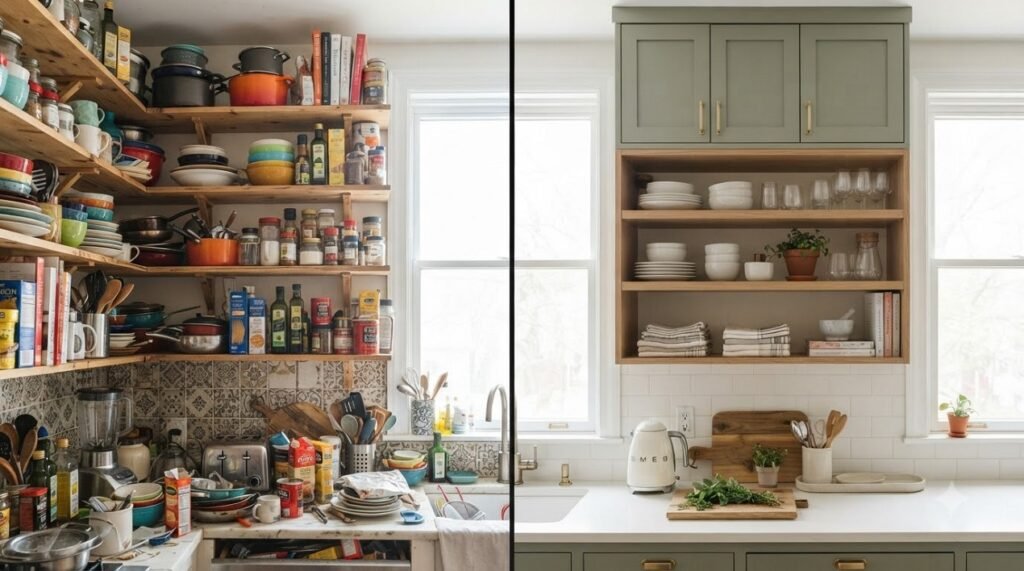
Be honest about this: if you plan to sell your home, open shelving everywhere could hurt you.
Real estate professionals consistently flag “open shelving everywhere” as a feature that can lower a home’s value. One 2026 report noted that removing upper cabinets or reducing storage space can be a “dealbreaker” for many buyers, because kitchens need to be functional, and storage is a top priority-.
A Berkshire Hathaway realtor put it bluntly: anyone who’s ever actually cooked in their kitchen knows the horrors open shelving can lead to. Every item will soon be coated in an “almost-impenetrable layer of oil, solidified food vapor and grime.” It’s a lot easier to wipe down the front of a cabinet than it is to wipe off every individual item every few days-31.
That said, some buyers value the open, minimalist style.
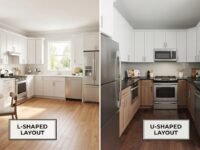
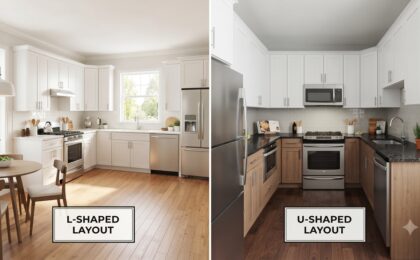
“But the market is mixed, and the safest approach for resale is cabinets as the default, with open shelving as an accent—just as the L-shaped vs U-shaped comparison for 10×10 rooms shows how storage trade-offs affect long-term value.”
📐 Small Kitchen Layout Decisions?
We compared L-shaped and U-shaped layouts for 10×10 kitchens—storage, cost, and work triangle efficiency. The same logic applies when deciding what goes on your walls.
Compare L-Shaped vs U-Shaped →Decision Framework: Which One Is Right for You?
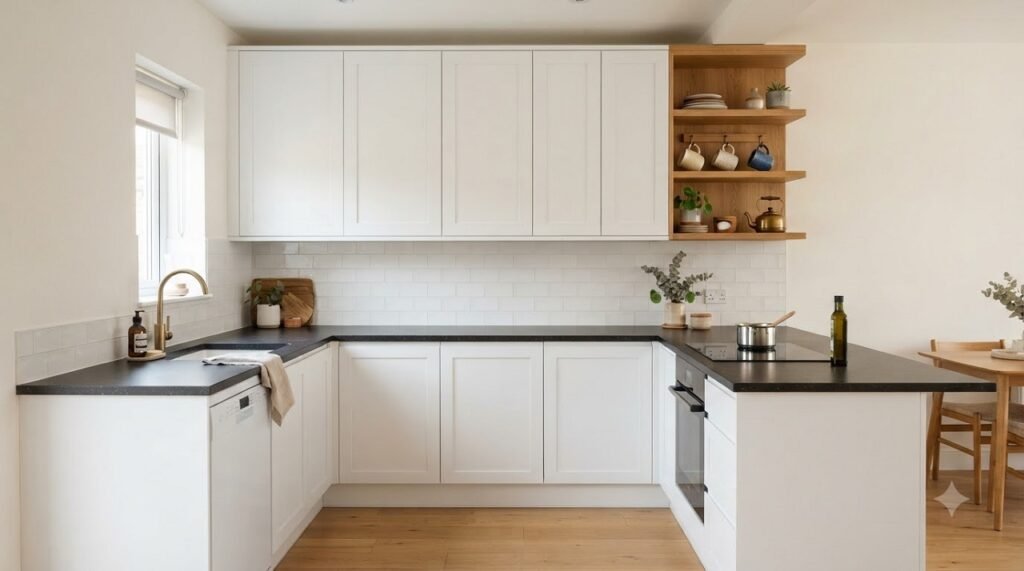
Use these questions to decide.
Choose Open Shelving (or a Hybrid) If:
- You enjoy styling and maintaining a curated space
- You’re willing to dust and wipe shelves weekly
- You have enough storage elsewhere (base cabinets, pantry, tall units) to compensate
- You want the room to feel visually larger and more open
- You’ll use open shelving as an accent, not your entire storage strategy
Choose Upper Cabinets (Primarily) If:
- You need maximum storage in a small footprint
- You don’t want to commit to frequent cleaning
- You have mismatched dishes or bulky items that need concealing
- You’re planning to sell your home within a few years
- Your kitchen is your primary cooking space, not a showpiece
The Designer’s Recommendation
For most small kitchens, the answer is a hybrid: keep upper cabinets where you need concealment and maximum storage (over the stove, over the fridge, on the heaviest-use wall), and introduce open shelving where it adds light and visual interest (above a sink, on a feature wall, at the end of a run).
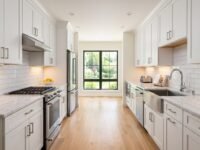
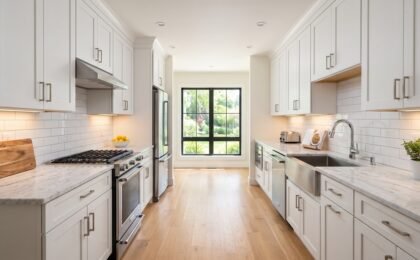
“This gives you the visual benefit of open shelving without its full maintenance burden-43—and if you’re working with a narrow layout, the single-wall galley kitchen configurations in our galley guide show how to apply the same hybrid logic in a slim run.”
🔍 Need More Small Kitchen Storage Ideas?
Our guide to the 10 best galley kitchen layouts covers storage configurations for narrow spaces, with real measurements you can apply to any small kitchen.
View 10 Galley Kitchen Layouts →Frequently Asked Questions
Are open shelves practical in a small kitchen?
Yes, when combined with closed cabinets. They can make a space feel more open while giving easy access to daily items-58. But if you rely on them for all your storage, you’ll struggle with capacity and maintenance.
How do I prevent open kitchen shelves from looking messy?
Keep a consistent colour scheme, use matching storage containers, and leave some empty space for balance-58. Avoid cluttering the shelves—otherwise you’ll get the opposite effect of what you intended-57.
Do open shelves collect dust and grease?
Yes. Items placed on open shelving gather dust more quickly than if they were stored in closed cabinetry, and grease from cooking oils can coat items near the stove-39. This is the single most important practical consideration. If you don’t have time to dust and wipe regularly, open shelving may not be right for you.
Are open shelves cheaper than upper cabinets?
Generally, yes. Open shelving materials and installation cost less than full upper cabinets-. You’re not paying for doors, hinges, or the labor to install them. However, they may require upkeep and thoughtful styling that adds an ongoing time cost.
Does open shelving lower home value?
It can, especially if used everywhere. Real estate professionals frequently list “open shelving everywhere” as a feature that can deter buyers who prioritize hidden storage-. A hybrid approach—cabinets as the default, shelves as an accent—is safer for resale.
What is replacing open shelving in 2026?
Designers report a shift toward glass-front cabinets and more restrained, intentional open shelving. Instead of long runs of open shelves, the trend is toward “curated, built-in moments that feel architectural and purposeful”-48.
Conclusion
The open shelving vs. upper cabinets debate doesn’t have a universal winner. It has a winner for your kitchen, your habits, and your lifestyle.
Here’s the honest summary:
- Open shelving makes a small kitchen feel larger and airier. It’s cheaper and gives you display space. But it requires regular cleaning and styling, and it holds less than cabinets. It works best as an accent, not your entire strategy.
- Upper cabinets give you maximum storage, protect against dust and grease, and conceal clutter. They’re safer for resale. But they can make a small kitchen feel heavier and less open.
- The hybrid approach—cabinets where you need concealment and volume, shelves where you want openness and display—is what most designers actually recommend for small kitchens.
Choose based on your real life, not the Instagram version of it. If you’ll maintain those shelves, they’ll reward you every day with a kitchen that feels twice as big. If you won’t, closed cabinets will serve you better.
Either way, you’ll have a kitchen that works. And that’s the point.