


October 21, 2026
7 Paint Colors that Visually Double
Introduction
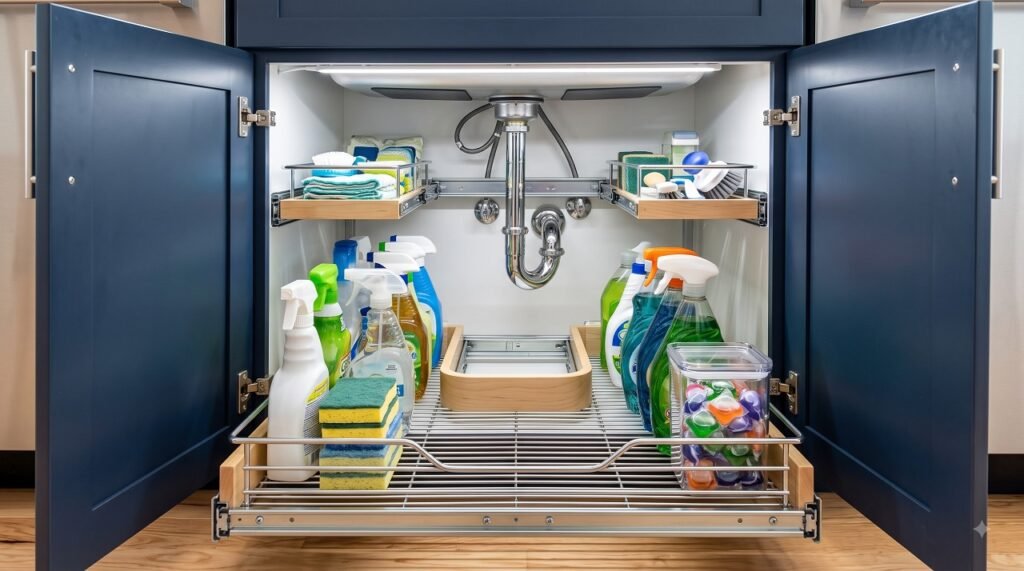
The cabinet under your kitchen sink is the most wasted space in your home.
You know the scene: you open the doors, shove a bottle of dish soap and a box of trash bags into the void, and slam the doors shut before the P-trap and garbage disposal can swallow anything else. It becomes a dark, messy “black hole” where cleaning supplies go to die.
The problem isn’t you—it’s the plumbing. The P-trap, water supply lines, and garbage disposal take up a massive amount of square footage right in the middle of the cabinet. Standard shelving won’t fit, and standard bins bump into the pipes.
But you don’t have to surrender that space. With the right organizers, you can navigate the awkward plumbing and turn that messy void into a highly functional storage zone.
In this guide, I’ll break down the best under-sink organizers for awkward plumbing, how to measure around your pipes, and exactly what to store (and what to keep out) to keep your cabinet clean and dry.
Why Under-Sink Cabinets Are a Design Nightmare
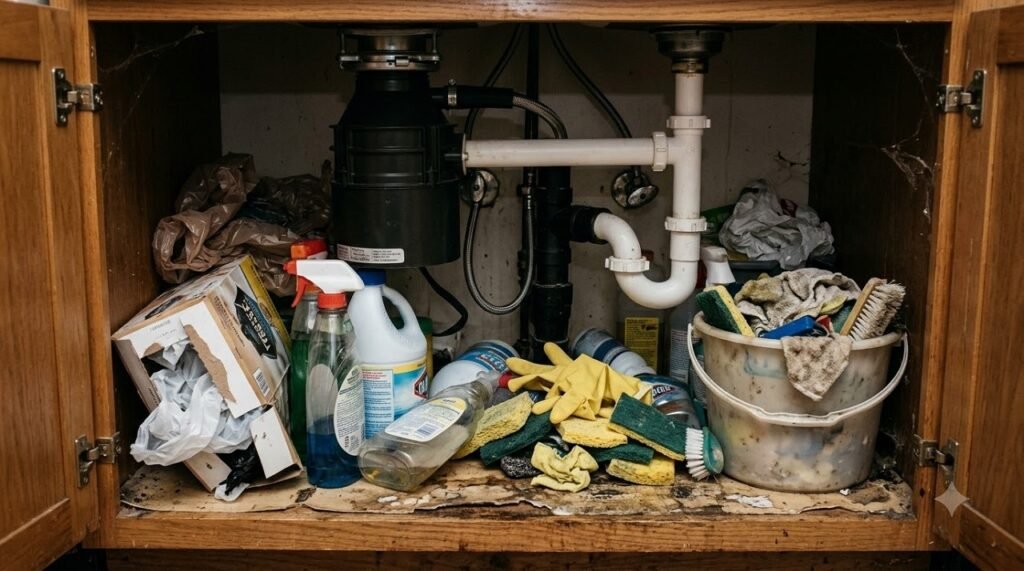
Standard base cabinets are 24 inches deep and 30 to 36 inches wide. But the under-sink cabinet loses a massive chunk of that space to mechanics:
- The P-Trap: The curved pipe that prevents sewer gas from entering your home. It usually sits squarely in the middle and back of the cabinet.
- The Garbage Disposal: Bulky, heavy, and prone to vibration. It takes up significant space on one side.
- Water Valves: Hot and cold supply lines stick out from the back wall.
- The Sink Basin: The bottom of the sink itself hangs down, meaning your “top shelf” is usually taken up by the sink bowl.
Because of this, standard organizing solutions (like uniform shelves or tall bins) are useless. You need adaptable storage that can shift around the hardware. The National Kitchen & Bath Association (NKBA) notes that utilizing customizable pull-out and modular storage is essential for maximizing base cabinets with structural obstacles.
The 5 Best Types of Under-Sink Organizers
Here are the most effective types of organizers designed specifically to navigate awkward plumbing.
1. Sliding Pull-Out Drawers (With U-Shaped Cutouts)
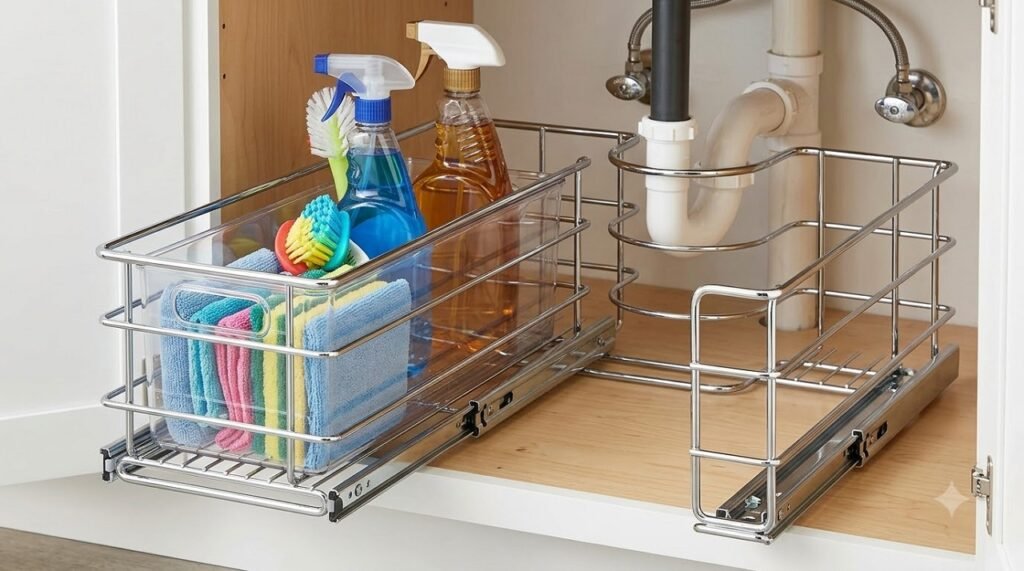
Best for: Deep cabinets with a P-trap in the center.
Cost: $40–$100
This is the gold standard for under-sink storage. These organizers are two-tiered drawers that slide out on rails. The magic is in the design: the bottom or middle sections feature a U-shaped cutout (or an adjustable sliding panel) specifically designed to fit around the P-trap.
Why it works: Instead of reaching blindly into the back of the cabinet, you pull the entire unit out. You get full visibility of everything you’ve stored.
Pro tip: Look for units with adjustable shelves so you can lower a shelf to make room for your specific garbage disposal.
2. Expandable Two-Tier Shelves
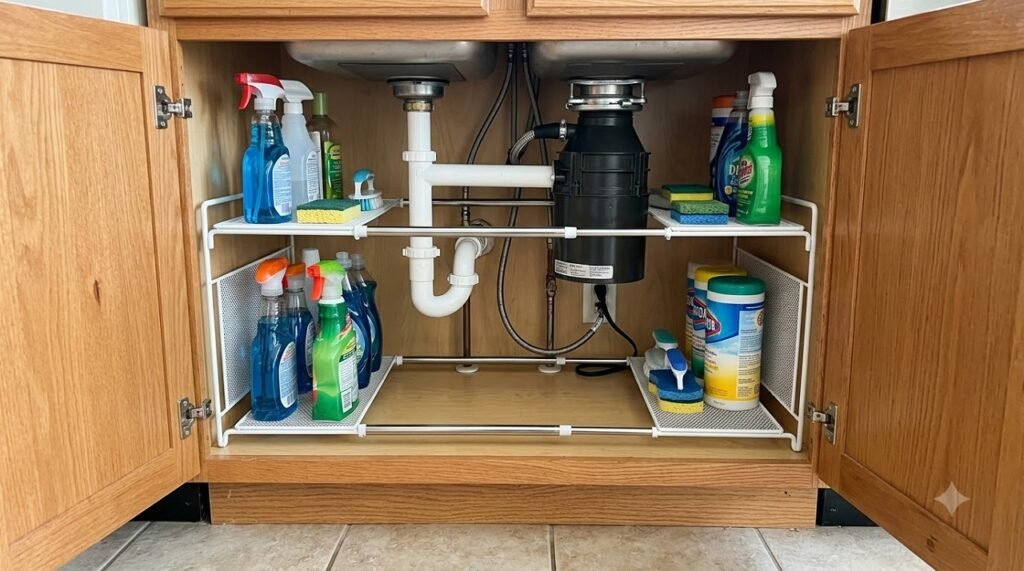
Best for: Cabinets where the P-trap is off-center or the disposal is on one side.
Cost: $20–$40
These are tension-pole or wire-frame shelves that sit on the floor of the cabinet, spanning over the pipes. They usually feature a split-shelf design, meaning you can slide the left and right halves apart to create a gap for the plumbing.
Why it works: They double your vertical storage by giving you a top and bottom tier. The open wire design allows you to see through them, so you don’t forget what’s in the back.
Pro tip: Avoid solid MDF or wood shelves in this area. If a pipe leaks, wood will warp and grow mold. Choose plastic or rust-resistant coated wire.
3. Lazy Susans / Turntables
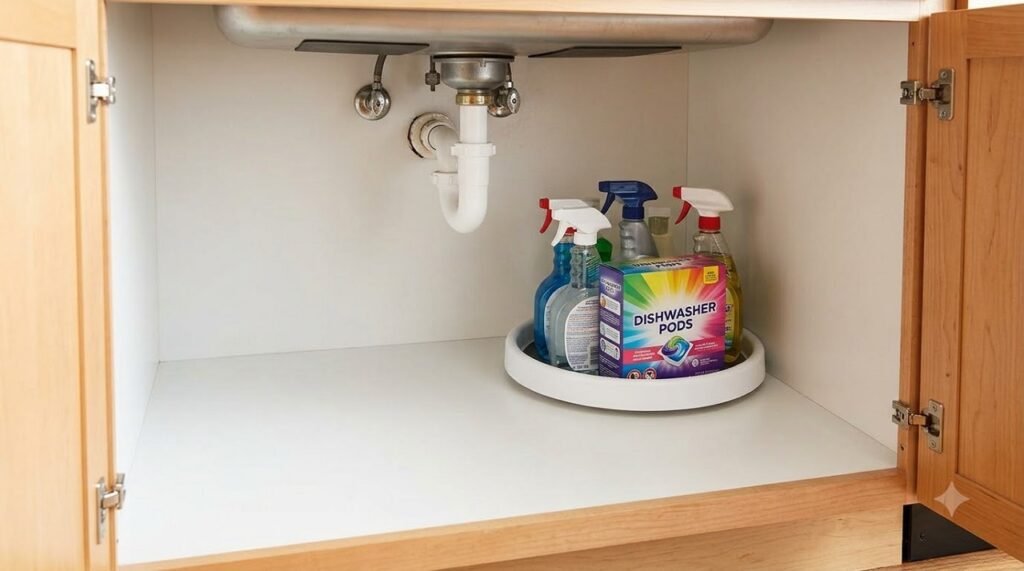
Best for: Corner sinks or recessed spaces.
Cost: $15–$30
A Lazy Susan is a circular tray that spins on a base. While often used in corner upper cabinets, they are brilliant for under-sink storage.
Why it works: In an awkward space where you can’t reach the back corners, a Lazy Susan brings the back corner to you. You can place one on the left of the pipes and one on the right.
Pro tip: Buy a Lazy Susan with a raised rim so bottles don’t fly off when you spin it. Look for a non-slip base.
4. Over-the-Door Organizers
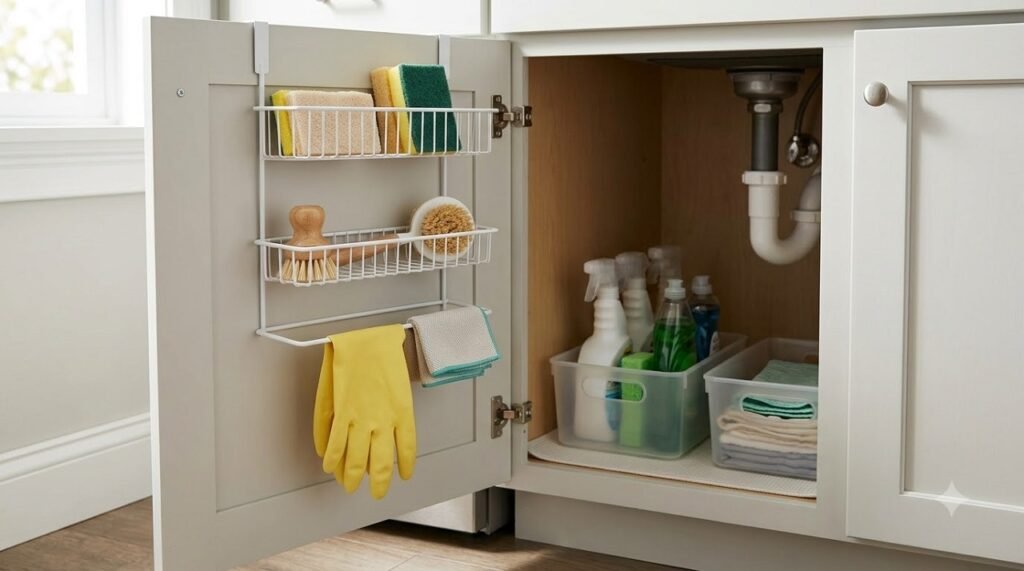
Best for: Bottles, brushes, and sponges that don’t fit on the floor.
Cost: $15–$30
You have two cabinet doors under your sink. You’re currently not using the inside of them. An over-the-door rack (or an adhesive-mounted rack) gives you immediate, zero-footprint storage.
Why it works: It gets small items off the cabinet floor and keeps them right where you need them. It’s perfect for sponges, dish brushes, rubber gloves, and specialty cleaning sprays.
Pro tip: Don’t hang heavy items (like a giant bottle of bleach) on the door—it strains the hinges. For more door-storage ideas, check out our 20 Vertical Storage Ideas to Free Up Your Countertops.
5. Clear Stackable Bins
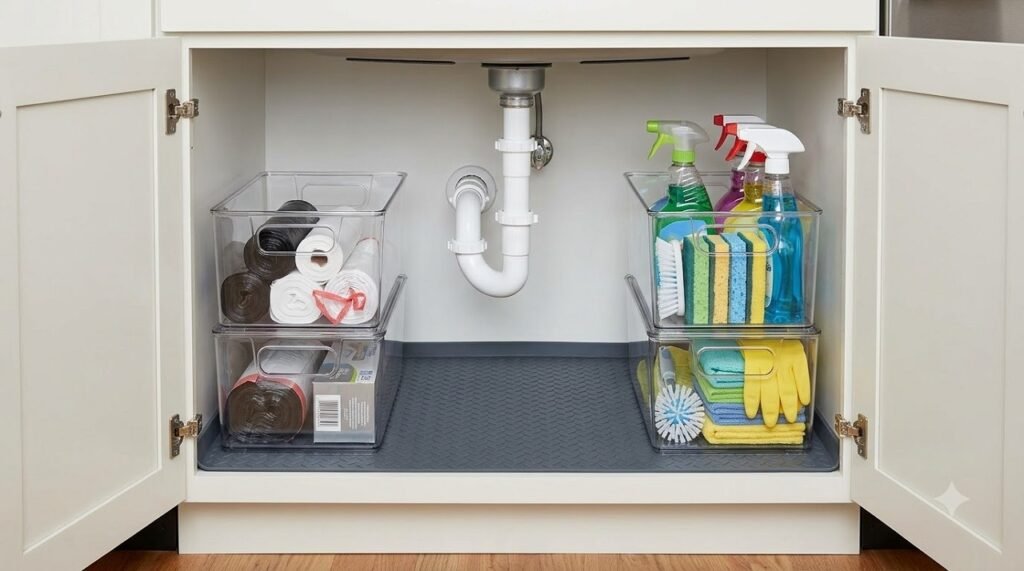
Best for: Minimalist organization or shallow under-sink spaces.
Cost: $10–$25
If your plumbing is so bizarre that standard organizers won’t fit, grab a set of clear plastic bins.
Why it works: You can place them on the left and right of the plumbing. Because they are clear, you can see exactly what is in them. Because they are individual bins, you can just pull the whole bin out like a drawer to grab what you need.
Pro tip: Group items by category. One bin for dishwasher pods, one bin for sponges, one bin for specialty cleaners.
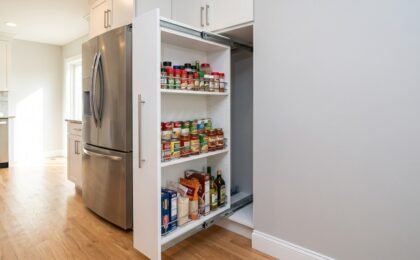
Looking to maximize other tricky spaces in your kitchen? Check out our step-by-step guide on How to Build a Pull-Out Pantry in a 12-Inch Gap to reclaim your narrow spaces.
How to Measure Your Awkward Plumbing (Before You Buy)
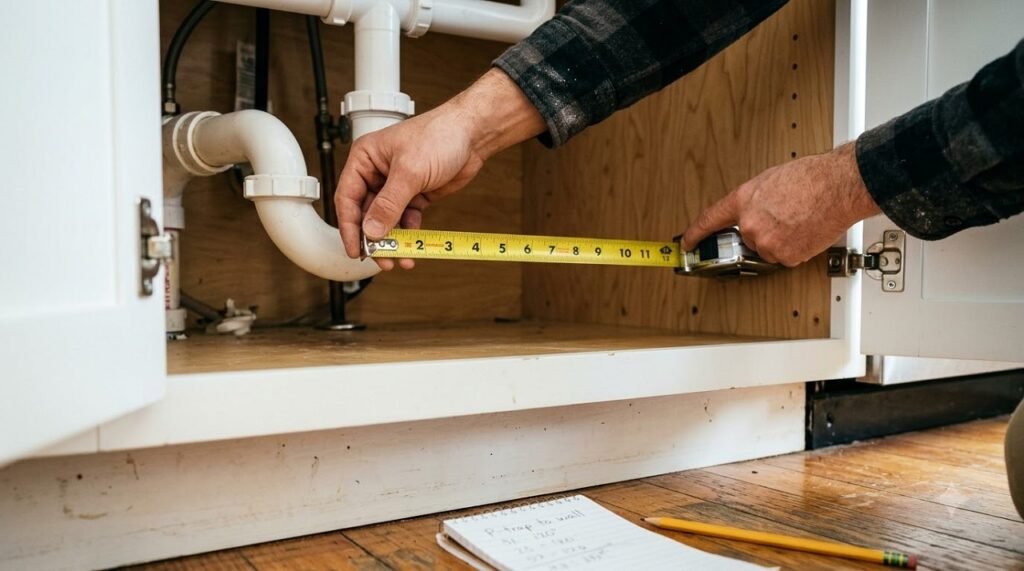
You cannot guess when buying under-sink organizers. If you buy a sliding drawer that hits the P-trap by half an inch, you’ll have to return it.
Grab a tape measure and a piece of paper:
- Measure the Cabinet Floor Width: Measure the distance between the left and right cabinet walls at the very bottom.
- Measure the Cabinet Depth: Measure from the front frame to the back wall.
- Measure the Cabinet Height: Measure from the floor to the bottom of the sink basin. (Note: Account for the sink’s depth—some sinks hang lower than others).
- Map the Obstacles: Measure the width and depth of your P-trap and garbage disposal. Note their positions. Is the P-trap in the center? Is the disposal on the left?
Once you have these numbers, check the product dimensions before buying. Always leave at least 1 inch of clearance around the P-trap so the pipes don’t rattle against your organizer. (If you ever need to change a P-trap, This Old House has a great tutorial on how to do it without damaging the cabinet).
What to Store (and Never Store) Under Your Sink
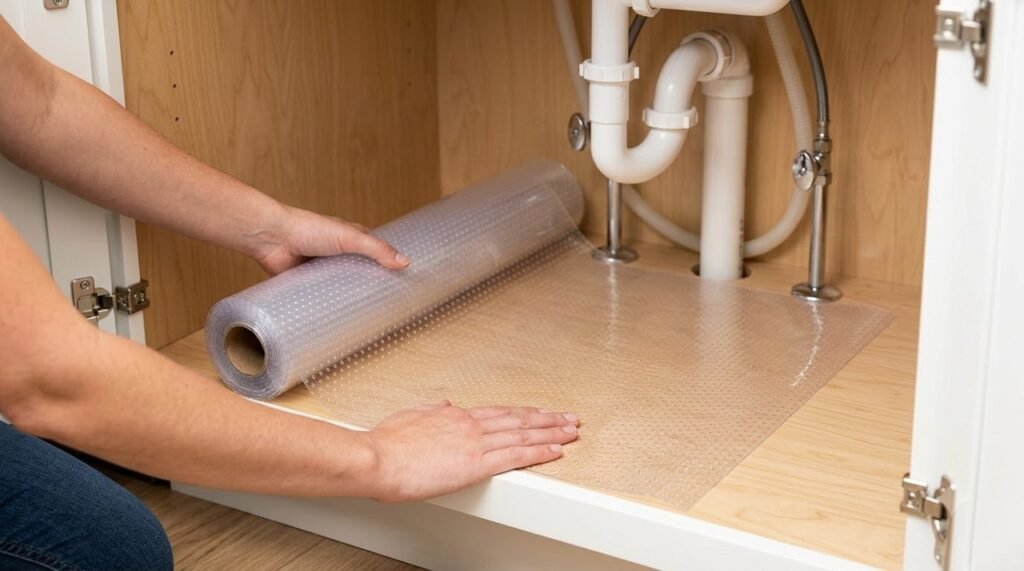
The area under the sink can get warm, damp, and dark.
✅ What TO Store:
- Cleaning supplies (dish soap, spray cleaners)
- Sponges, brushes, and scrub pads
- Trash bags, plastic wrap, and foil (keep in a pull-out bin)
- Dishwasher tablets (if kept in a sealed container)
- Fire extinguisher (always keep one in the kitchen)
- A small bucket for leaks
❌ What NEVER to Store:
- Food: The heat from the dishwasher/disposal and the moisture can cause canned goods or dry goods to spoil rapidly.
- Pet Food: Same reason. It can mold.
- Paper Goods: Keep your backup paper towels elsewhere. They absorb moisture and odors.
- Anything you use daily: You don’t want to be kneeling on the floor every day to grab the dish soap. Keep daily items on the counter or in a door rack.
DIY vs. Store-Bought Organizers
You can easily build a DIY under-sink organizer using scrap wood or PVC, but it requires custom cuts to navigate your specific P-trap.
Store-bought options are almost always the better route here because they are engineered with adjustable panels, sliding U-shaped cutouts, and moisture-resistant materials.
For a fantastic, space-saving alternative that you can easily build yourself, see our guide on building your own slim pull-out pantry.
🛠️ Love Custom Storage Solutions?
If you’re handy with a drill, see our step-by-step guide on how to build a custom pull-out pantry in a narrow 12-inch gap to reclaim even more kitchen space.
Build a 12-Inch Pull-Out Pantry →6 Common Under-Sink Organization Mistakes to Avoid
- Using wood or MDF shelves. The under-sink area is prone to condensation and minor leaks. Use plastic, wire, or stainless steel.
- Blocking the water valves. If you have an emergency, you need to be able to reach the hot and cold shut-off valves instantly. Don’t stack heavy bins in front of them.
- Not accounting for disposal vibration. Leave a little breathing room around the garbage disposal. If a bin rests against it, it will rattle loudly every time you turn it on.
- Ignoring the door. Most people forget the inside of the cabinet doors. Add adhesive hooks or an over-the-door rack to use this free space.
- Overstuffing. Just because you have organizers doesn’t mean you should cram it full. Leave space so you can easily pull items out.
- Storing toxic chemicals with everyday items. If you have children or pets, install a child-safety latch on the doors. Keep harsh chemicals in a sealed bin separate from everyday sponges.
Rental-Friendly Under-Sink Solutions
If you rent, you shouldn’t drill into your cabinets.
- Tension Rod Shelves: These wedge against the cabinet walls without screws.
- Adhesive Hooks: Mount them on the cabinet doors for sponges and brushes.
- Freestanding Wire Bins: These require zero installation.
- Lazy Susans: They just sit on the cabinet floor and spin.
🔍 Need More Rental-Friendly Storage Ideas?
We rounded up 20 vertical storage solutions for small kitchens—including tension rods, floating shelves, and magnetic strips—that require zero drilling.
View 20 Vertical Storage Ideas →Frequently Asked Questions
How do I organize under my sink with a garbage disposal?
Use a sliding pull-out drawer with a U-shaped cutout, or two separate stackable bins placed on either side of the disposal. Leave at least 1 inch of space around the disposal to accommodate vibration.
What is the best under-sink organizer?
The best option is a two-tier sliding pull-out drawer with an adjustable U-shaped cutout. It allows you to slide the entire storage unit out to reach items, and the cutout accommodates the P-trap without wasting space.
How do I keep under-sink items dry?
Line the bottom of the cabinet with a waterproof mat or shelf liner. Keep items in clear plastic bins (rather than loose) so if a pipe leaks, your items are protected. You can also place a small plastic drip tray under the P-trap to catch condensation.
What should you not store under the kitchen sink?
Do not store food, pet food, paper goods, or anything that can be damaged by heat or moisture. It is also unsafe to store heavy cast iron or sharp items where you might hit your head or scrape your hands.
Are pull-out under-sink organizers worth it?
Yes. They instantly double your usable storage space by making the deep, dark back of the cabinet accessible. They also protect your cabinet floor from spills and make cleaning much easier.
Conclusion
The space under your sink is only a black hole if you let it be. By choosing the right organizer—whether it’s a sliding U-shaped drawer, a set of adjustable shelves, or a simple Lazy Susan—you can navigate the P-trap and the disposal with ease.
Here’s the quick action plan:
- Empty the cabinet and measure the width, depth, and height around the pipes.
- Choose a pull-out drawer or tiered shelf that fits around the plumbing.
- Use the cabinet doors for lightweight items with over-the-door racks.
- Keep it dry with a waterproof liner and clear bins.
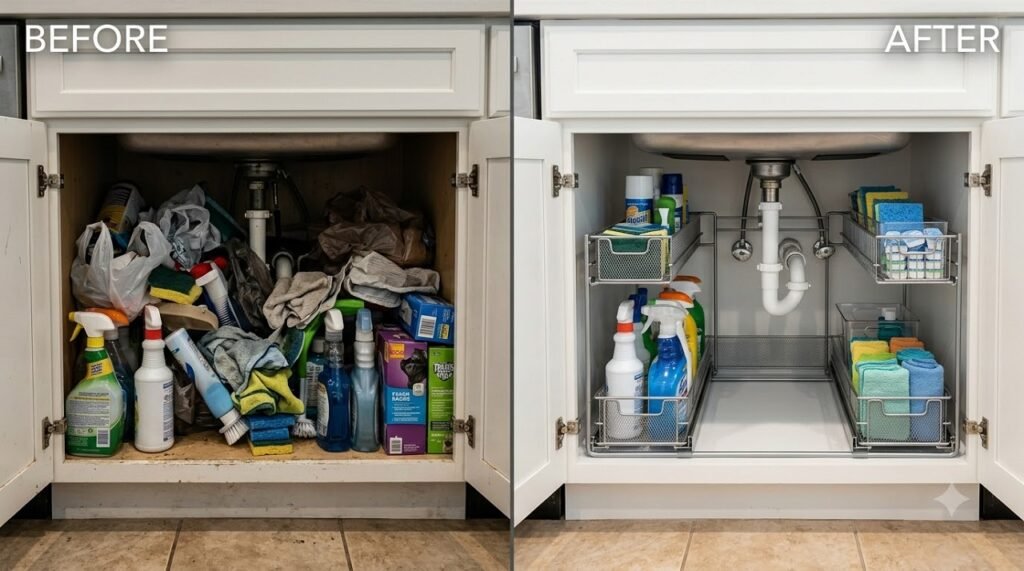
Do these four things, and your under-sink space will stop being a source of frustration and become one of the hardest-working storage zones in your kitchen.