





October 21, 2026
7 Paint Colors that Visually Double
Introduction
Every small kitchen has one: a corner cabinet that swallows items into a dark, inaccessible void. You reach in blindly, past the pot you actually want, and pull out a salad spinner you forgot you owned.-16
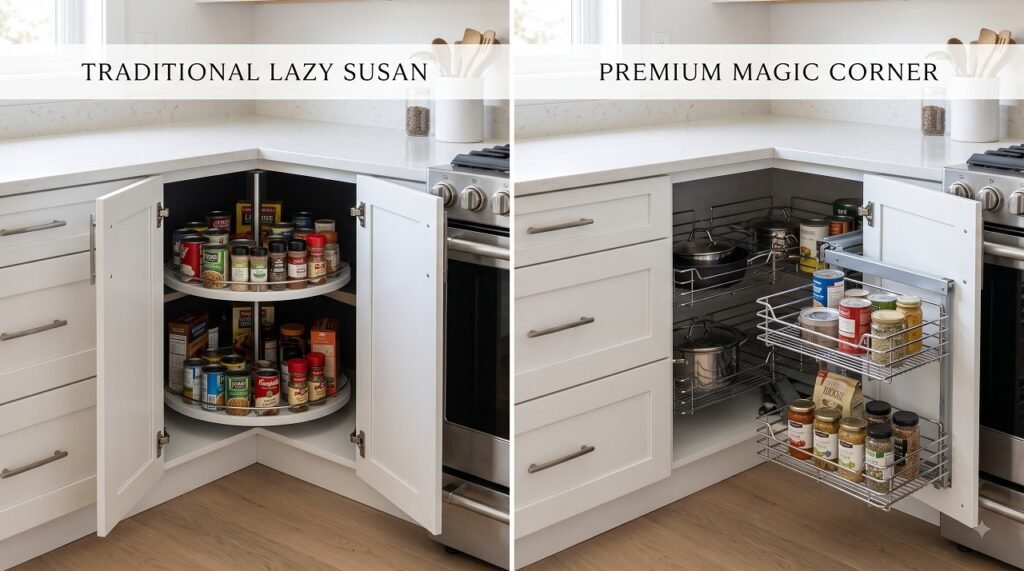
For decades, the default solution has been the Lazy Susan—a rotating circular tray that brings the back of the cabinet to the front. It’s cheap, simple, and it works. But is it the best solution for a small kitchen?
Enter the Magic Corner: a premium pull-out mechanism with two tiered shelving units that glide out and pivot, bringing every inch of the corner into the light. It’s the “hands down the best use of space” according to cabinet makers who install them daily, but it comes with a significant price tag.-3
In this guide, I’ll break down the honest pros and cons of both systems, compare their costs and measurements, and help you decide which one belongs in your kitchen.
Why Corner Cabinets Are the Hardest Working (and Most Frustrating) Space
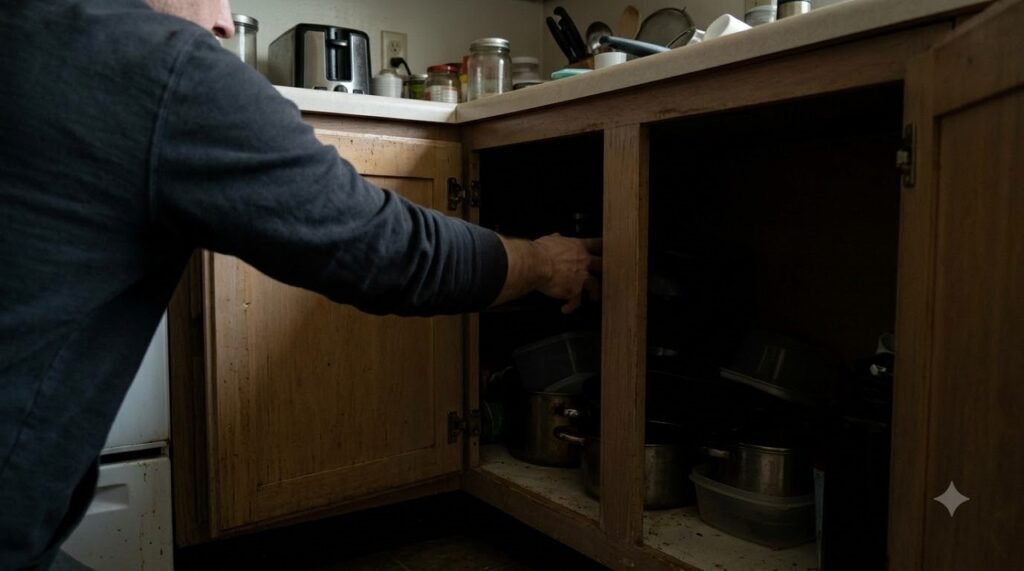
A corner cabinet is created when two runs of base cabinets meet at a right angle. The square of cabinet floor where they meet—the corner itself—is not directly accessible from either door.-16
There are two types of corners, and they require different solutions:
- True Corner (L-Shaped or Pie-Cut): A cabinet that wraps both walls with a door set across the angle. A Lazy Susan is the classic solution here.
- Blind Corner: A long cabinet that runs into the corner, with a door on the open part and a hidden cavity tucked behind the neighboring run. A Magic Corner is designed specifically for this.-16
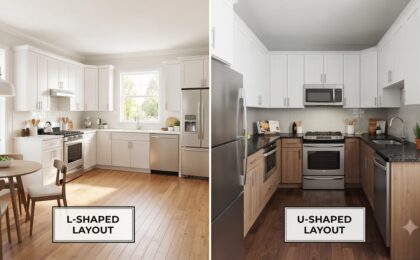
In a small kitchen, that hidden corner space can represent up to 30% of your total base cabinet storage. Wasting it isn’t an option. For more small kitchen layout advice, see our guide to L-shaped vs. U-shaped kitchens for 10×10 rooms.
What Is a Lazy Susan? (The Classic Solution)
A Lazy Susan (also called a carousel) is a circular tray or set of trays that rotates on a central pole inside a corner cabinet.
How It Works
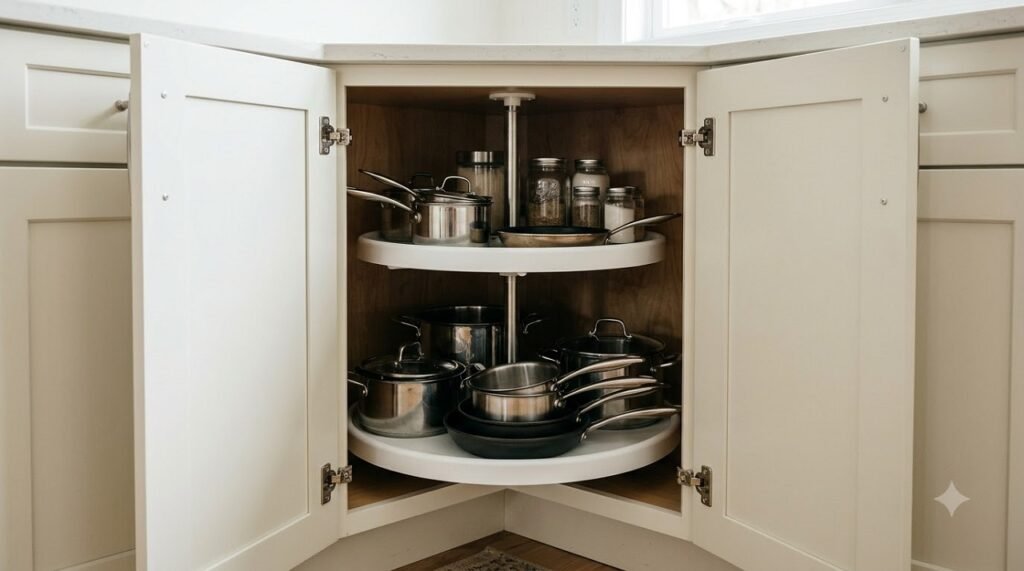
You open the cabinet door and spin the tray to bring items from the back to the front. Most Lazy Susans are two-tiered, with an adjustable height so you can fit taller items on one level.
Pros
- Affordable: You can buy a basic two-tier Lazy Susan for $30–$150. It is the most budget-friendly corner solution available.
- Easy to install: Most models drop into an existing corner cabinet with no major modifications.
- Good for bulky items: Pots, pans, large bottles, and boxed goods rotate easily.-6
- Rental-friendly: No drilling or permanent hardware required.
Cons
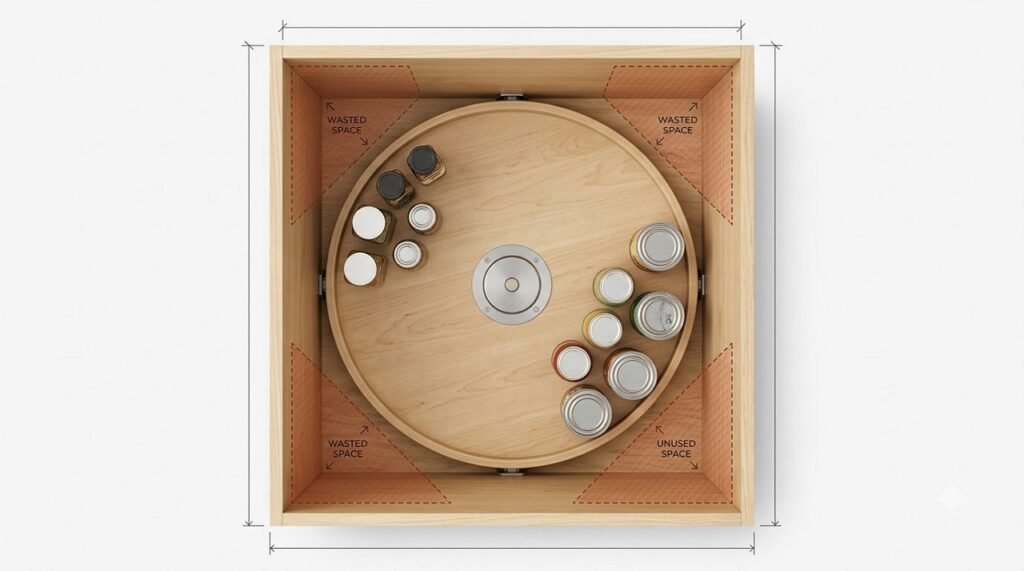
- Wastes perimeter space: The circular trays don’t reach the corners of a square cabinet. You lose up to 20% of the shelf area to empty space.-4
- Items fall off: Without a raised rim, bottles and jars can tip over when you spin the tray.-4
- Mechanical wear on doors: Double-door Lazy Susan setups can cause door clashing over time, scratching the cabinet finish.-3
- Hard to clean: The central pole and trays are awkward to remove and wipe down.
Want to see how Lazy Susans compare to other cabinet storage? Our breakdown of Open Shelving vs. Upper Cabinets covers the same storage trade-offs for wall-mounted options.
What Is a Magic Corner? (The Premium Upgrade)
A Magic Corner is an articulating pull-out system designed for blind corners. It consists of two square, tiered shelving units that sit parallel inside the cabinet.
How It Works
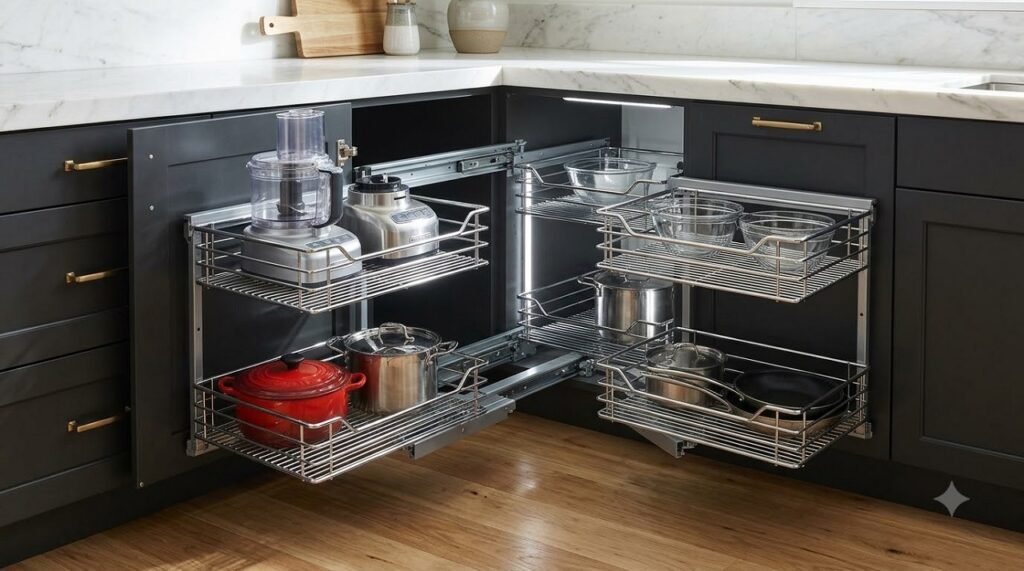
When you open the cabinet door, the front basket pulls out and simultaneously drags the second basket out of the hidden blind portion. Both baskets swing to a 90-degree open position, giving you full access to everything in the corner.-3
Pros
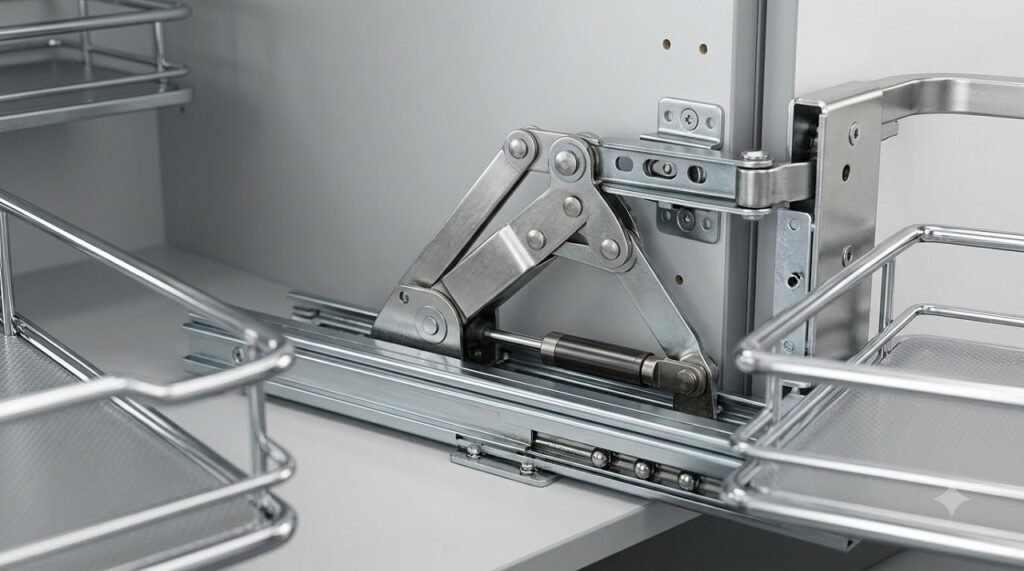
- Maximum space utilization: The square baskets use every inch of the corner. There is no wasted perimeter space.-3
- Full accessibility: You never have to reach into a dark void. Everything comes to you.
- Soft-close available: Premium models (like Häfele’s Magic Corner) feature soft-close mechanisms that prevent slamming.
- Durable: High-quality steel and hardware are built to last for decades.
Cons
- Expensive: A full Magic Corner system costs $300–$800+ for the hardware alone, before installation. In some markets, the mechanism alone costs the equivalent of $400–$600.
- Requires precise fitting: The cabinet must be built to exact specifications. Door opening must be at least 20.5 inches wide.
- Not DIY-friendly: Installation requires carpentry skills and careful alignment.
- Overkill for shallow cabinets: The mechanism needs a minimum cabinet depth of 2 feet and a width of at least 35 inches (900mm) to function properly.
Working with a very tight kitchen footprint? Our guide to How to Build a Pull-Out Pantry in a 12-Inch Gap shows how to reclaim narrow spaces without premium hardware.
Magic Corner vs. Lazy Susan: Side-by-Side Comparison
| Feature | Lazy Susan | Magic Corner |
|---|---|---|
| Best for | True corner cabinets (pie-cut) | Blind corner cabinets |
| Storage efficiency | ~80% (circular trays) | ~95% (square baskets) |
| Accessibility | Moderate (spin to reach) | Excellent (pulls out to you) |
| Cost (hardware) | $30–$150 | $300–$800+ |
| Installation | DIY-friendly | Professional installation recommended |
| Minimum cabinet width | 24 inches (for a 24″ Susan) | 35 inches (900mm) |
| Minimum cabinet depth | 21 inches | 24 inches (2 feet) |
| Load capacity | 25–65 lbs per tray | 100+ lbs total |
| Mechanical complexity | Low | High |
| Warranty | 1–3 years | 5–10+ years (premium brands) |
Data compiled from Ask a Cabinetmaker, DesignCafe, and Little Giants.-3-11-16
The Verdict: If you have a true corner and a tight budget, the Lazy Susan is a solid, functional choice. If you have a blind corner, cook frequently, and want maximum accessibility, the Magic Corner is worth the investment.
The Hidden Third Option: Kidney Pull-Outs
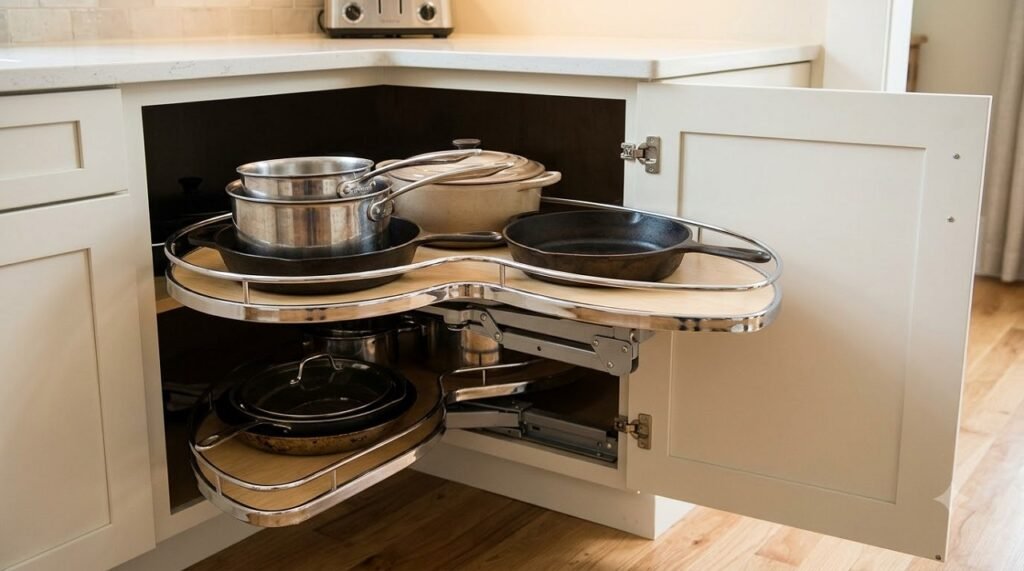
Before you decide between the two extremes, consider the kidney-shaped pull-out.
This is a two-tier shelf shaped like a kidney bean, mounted on a partial-rotation mechanism. It pulls the blind corner space out into the light, just like a Magic Corner, but with a simpler mechanism and a lower price tag.-3
Who it’s for: Anyone who wants Magic Corner accessibility without the premium price. It is often the “sweet spot” for small kitchens on a moderate budget. Cabinet makers often call it their favorite overall option because it balances cost and function.-3
Essential Measurements Before You Buy
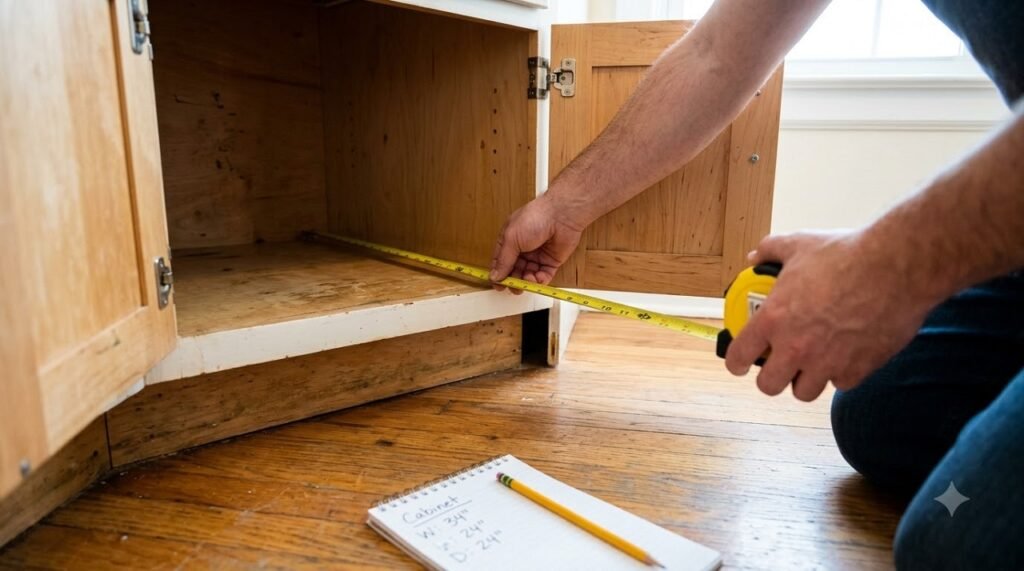
You cannot guess when buying corner hardware. If the mechanism doesn’t fit the cabinet carcass, it won’t work.
| Measurement | Lazy Susan | Magic Corner |
|---|---|---|
| Cabinet width | 24–36 inches | 35–43 inches (900–1100mm) |
| Cabinet depth | 21–24 inches | 24 inches minimum |
| Door opening | Standard corner door | 20.5 inches minimum |
| Cabinet height | 30–36 inches (base) | 30–36 inches (base) |
| Clearance for swing | None required | Must account for adjacent drawers/doors |
Rule of thumb: Measure the interior width, depth, and height of your cabinet, not the exterior. Subtract at least 1 inch from every dimension to account for hardware clearance and door swing.
Looking for more storage solutions for awkward spaces? Our guide to the Best Under-Sink Organizers for Awkward Plumbing covers how to navigate P-traps and garbage disposals with the same problem-solving approach.
What to Store in Each System
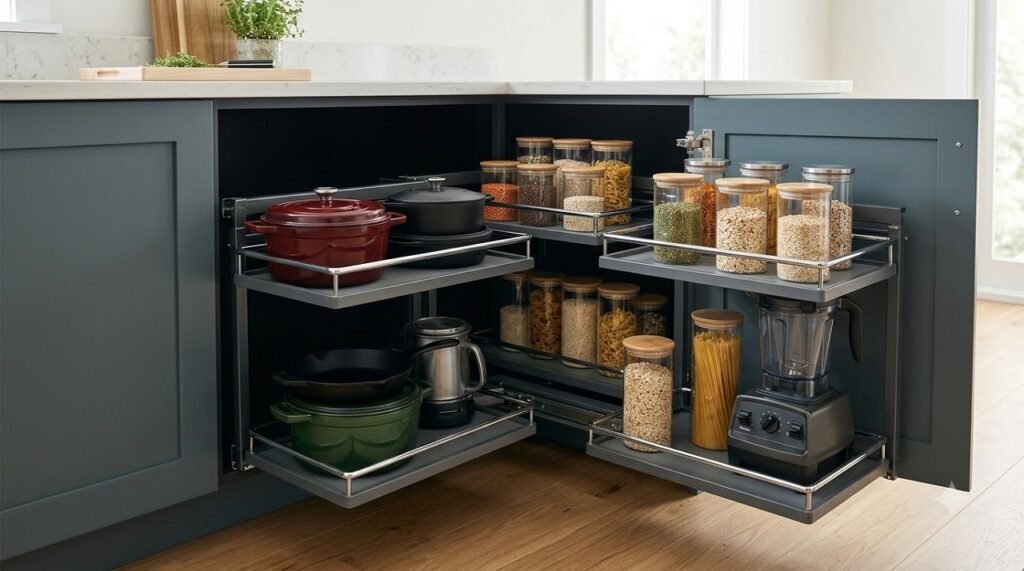
Choosing the right system also depends on what you plan to store.
Best for Lazy Susans:
- Pots and pans (stacked on the tray)
- Large bottles of oil and vinegar
- Boxed goods and bulk dry goods
- Spices and small jars (with a raised rim)
Best for Magic Corners:
- Heavy cookware (cast iron, large pots)
- Small appliances (blenders, food processors)
- Bulk pantry items (rice, flour, potatoes)
- Anything you use daily and want instant access to
What NOT to store in either: Tiny items without bins (they will fall through gaps), fragile glassware without padding (vibration from the mechanism can crack it), and anything that leaks (cleanup is a nightmare).-4
🔍 Need More Kitchen Storage Ideas?
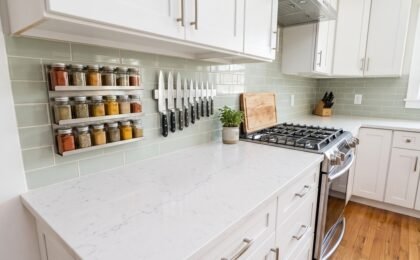
We rounded up 20 vertical storage solutions for small kitchens—magnetic strips, floating shelves, and slim pull-outs—with cost breakdowns for each.
View 20 Vertical Storage Ideas →Installation: DIY vs. Professional
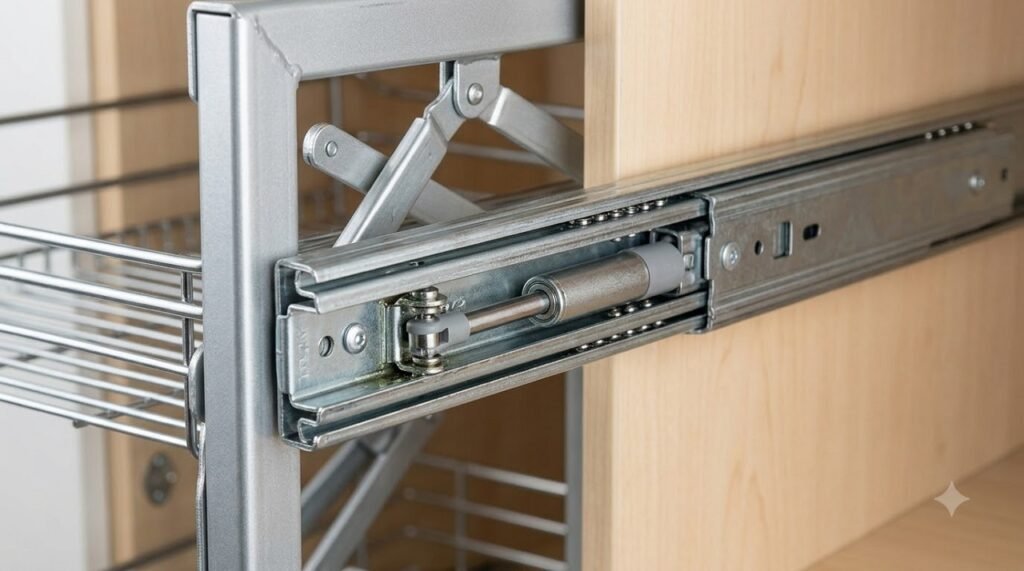
Lazy Susan Installation
A Lazy Susan is a DIY-friendly project. Most models require no drilling into the cabinet walls—they either tension-mount between the floor and ceiling or screw into the existing cabinet base. You can install one in under 30 minutes with a screwdriver.
Magic Corner Installation
A Magic Corner is not a beginner DIY project. The mechanism needs to be mounted to the cabinet floor and side walls with precise alignment. The door must be hinged correctly, and the baskets must glide without binding. Professional installation is strongly recommended. This Old House has excellent resources on cabinet hardware installation if you want to understand the process before hiring someone.
🛠️ Love Custom Storage Solutions?
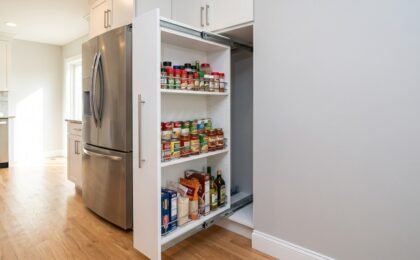
If you want to maximize every inch of your kitchen, see our step-by-step guide on how to build a custom pull-out pantry in a narrow 12-inch gap.
Build a 12-Inch Pull-Out Pantry →6 Common Corner Cabinet Mistakes to Avoid
- Buying before measuring. The #1 reason corner organizers get returned is that they don’t fit the cabinet opening. Measure the interior dimensions first.
- Ignoring door swing. A Magic Corner needs clearance for the door to open fully. If there is a drawer or another cabinet immediately adjacent, it may not work.
- Overloading the top tier. Keep the heaviest items on the bottom tier to maintain stability and prevent the mechanism from straining.
- Using a Lazy Susan in a blind corner. A circular tray in a blind corner still leaves the hidden space inaccessible. Use a kidney pull-out or Magic Corner instead.
- Skipping the soft-close upgrade. If you buy a Magic Corner, pay the extra $30–$50 for soft-close. The mechanism is heavy and will slam without it.
- Not accounting for the P-trap. If your corner cabinet shares space with plumbing, see our Under-Sink Organizer Guide for how to navigate pipes and disposals.
Frequently Asked Questions
What is better: a Magic Corner or a Lazy Susan?
It depends on your corner type and budget. A Lazy Susan is the best budget option for true (pie-cut) corners. A Magic Corner is the best option for blind corners where you want full accessibility and maximum storage efficiency. It costs significantly more but delivers better performance.
How much does a Magic Corner cost?
The hardware alone costs $300–$800+ depending on the brand and finish. Professional installation adds another $150–$400. In total, expect to spend $450–$1,200 for a fully installed Magic Corner system.
Can I install a Magic Corner myself?
It is technically possible if you are an experienced DIYer, but it is not recommended. The mechanism requires precise alignment and door-hinge adjustments. Improper installation can cause binding, sagging, or failure of the soft-close mechanism.
What is the minimum cabinet width for a Magic Corner?
Standard Magic Corner units require a cabinet width of at least 35 inches (900mm), with some models requiring up to 43 inches (1100mm). They also require a minimum door opening of 20.5 inches and a cabinet depth of at least 24 inches.
Do Lazy Susans waste space?
Yes. Because the trays are circular, they leave the corners of a square cabinet empty. This can waste up to 20% of the usable shelf area. However, they are still an efficient way to access the back of a true corner cabinet compared to reaching blindly.-4
What is the best corner cabinet solution for a small kitchen?
For a small kitchen with a true corner, a two-tier Lazy Susan with a raised rim is the most practical, affordable choice. For a small kitchen with a blind corner, a kidney pull-out offers the best balance of accessibility and cost, while a Magic Corner is the premium choice if budget allows.
Conclusion
The corner cabinet debate comes down to one question: How much is full accessibility worth to you?
Here’s the honest summary:
- Lazy Susan: Affordable, easy to install, and perfect for true corner cabinets. It wastes some space, but it works. Best for budget-conscious kitchens.
- Magic Corner: Expensive, but it turns a dead blind corner into the most accessible storage zone in your kitchen. Best for serious cooks with the budget to invest.
- Kidney Pull-Out: The middle ground. It brings blind-corner accessibility at a lower price point than a Magic Corner.
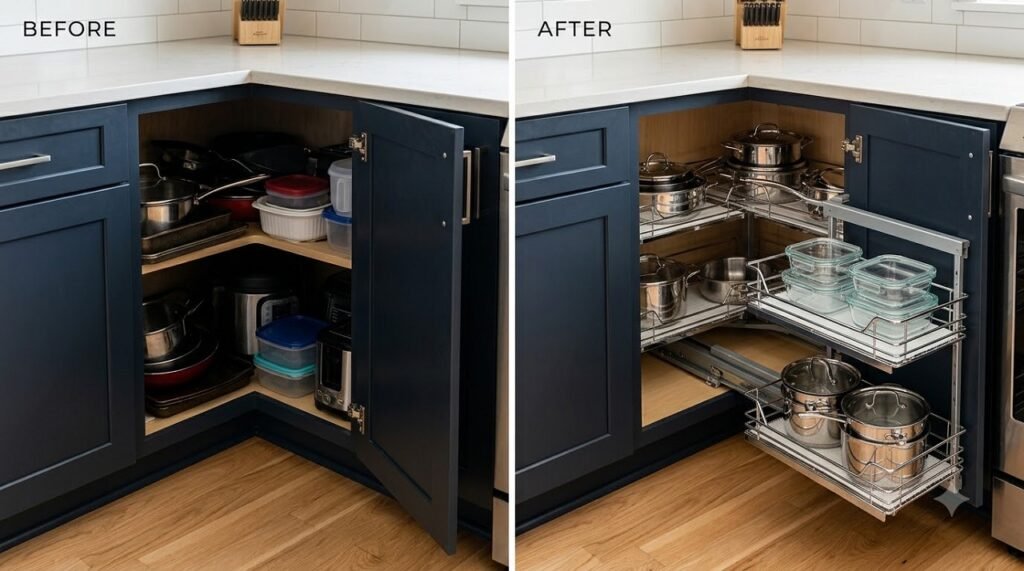
If you are remodeling a small kitchen and want to reclaim every inch, start by identifying your corner type (true vs. blind). Then choose the system that fits your cabinet dimensions and your budget.
Do that, and you’ll never have to dig for a lost salad spinner again.