




October 31, 2026
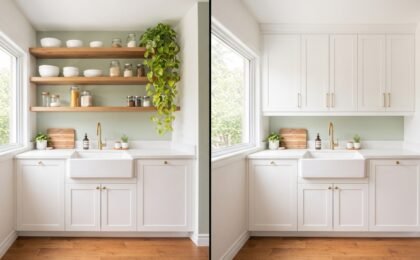
Before and After: A 1980s Galley
Introduction
When you are designing a small kitchen, every single decision—from the layout to the paint color—is made with one goal in mind: making the space feel bigger and brighter.
But when it comes to choosing your cabinet finish, the debate gets heated. Should you choose high-gloss cabinets that bounce light around the room like a mirror? Or matte cabinets that offer a soft, modern, and sophisticated look?
The short answer is: Glossy reflects more light.
The long answer is: Glossy reflects more light, but that doesn’t automatically mean it’s the best choice for your kitchen.
In this guide, we’ll break down the science of light reflection, the honest pros and cons of both finishes, and exactly where to use each one to make your small kitchen look twice as large without regretting your choice six months later.
The Physics of Light: How Finishes Work
To understand why one finish makes a room look bigger, you have to understand how light interacts with surfaces.
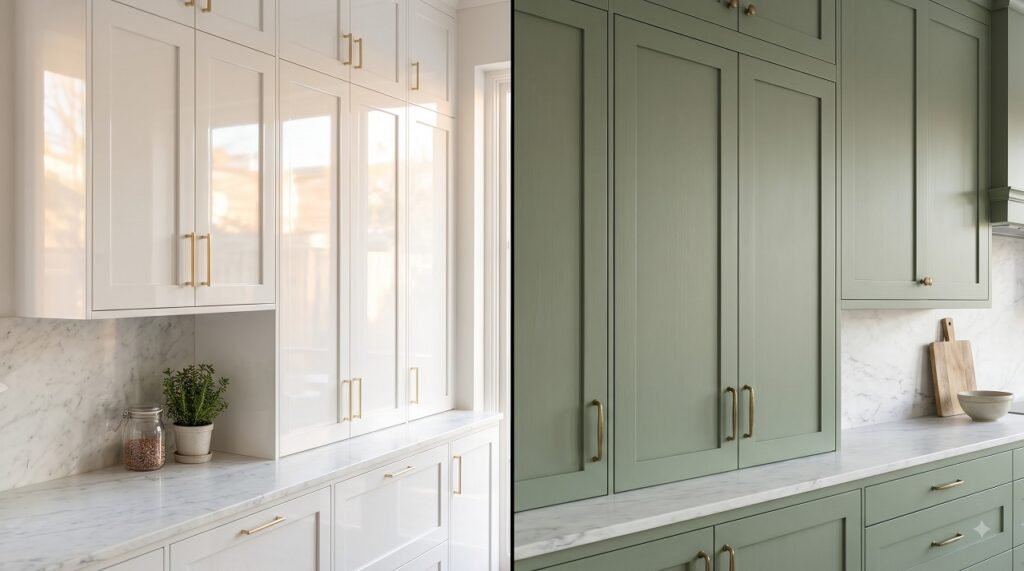
- Glossy (High-Gloss) Finishes: A glossy finish has a highly polished, smooth surface. When light hits it, it creates specular reflection. This means the light bounces off the surface at the exact same angle it hit. Think of a mirror. Glossy cabinets act like a subtle mirror, bouncing natural light and artificial light deep into the corners of the room. This reflection visually expands the space.
- Matte Finishes: A matte finish has a microscopically rough surface. When light hits it, it scatters in all directions. This is called diffuse reflection. Because the light isn’t bouncing back at you, matte surfaces absorb and soften the light. This creates a softer, calmer look, but it doesn’t push light into the room the way gloss does.
The Verdict: In terms of pure light reflection, glossy wins by a landslide. A glossy surface can reflect up to 80% of the light that hits it, while a matte surface reflects much less, depending on the exact texture.
The Case for Glossy Finishes in Small Kitchens
If your primary goal is to make a small kitchen look bigger, high-gloss cabinets are your best friend.
1. Maximum Light Reflection
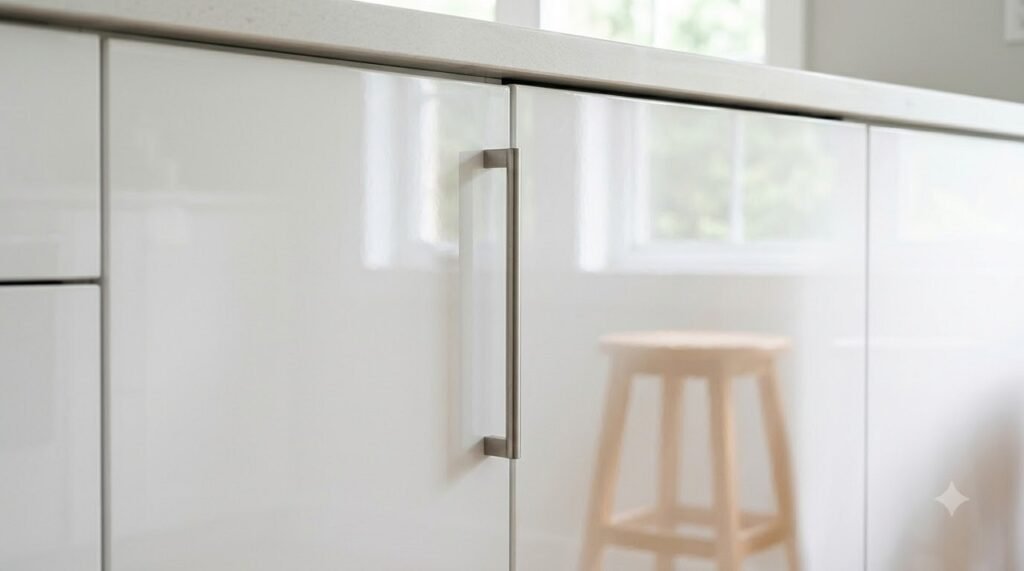
As mentioned, glossy cabinets bounce light around the room. If your kitchen has a window, a glossy finish will catch that natural light and spread it to the darkest corners. This eliminates shadows that make a small kitchen feel cramped.
2. Visual Expansion
Because glossy surfaces reflect the room back at you, they create an illusion of depth. A glossy cabinet door reflects the floor and the opposite wall, tricking the eye into thinking the room extends further than it does.
3. Easy to Clean
High-gloss finishes (like acrylic or high-gloss lacquer) are non-porous. Grease, food splatters, and dust wipe off effortlessly with a damp cloth. In a small kitchen where cooking splatter is a constant battle, this is a massive practical advantage. According to the NKBA (National Kitchen & Bath Association), easy-to-clean surfaces are a top priority for compact, high-use kitchens.
The Case for Matte Finishes in Small Kitchens
Despite the light-reflecting benefits of gloss, matte finishes have taken the design world by storm. Why? Because they offer a different kind of beauty.
1. Sophisticated, Modern Aesthetic

Matte finishes offer a soft, velvety texture that looks incredibly high-end and modern. They absorb light rather than bouncing it, creating a calming, grounded atmosphere that many homeowners prefer over the “shiny” look of gloss.
2. Hides Imperfections
Small kitchens endure a lot of wear and tear. Matte finishes are excellent at hiding minor scratches, smudges, and the inevitable dents that happen when you bang a pot against a cabinet door. Glossy cabinets, on the other hand, highlight every single flaw.
3. Texture and Depth
Because matte absorbs light, it allows the actual color of the cabinet to look richer and deeper. It also pairs beautifully with natural textures like wood, stone, and concrete.
The Hidden Downsides of Glossy (Fingerprints & Scratches)

Before you rush out to buy high-gloss cabinets, you need to know the reality of living with them:
- The Fingerprint Magnet: High-gloss is notorious for showing every single fingerprint, smudge, and streak of grease. If you have kids (or just cook a lot), you will be wiping down those cabinets daily.
- Scratch Susceptibility: Because the surface is polished, micro-scratches from cleaning cloths or rings can dull the finish over time.
- Can Look “Plastic”: Cheap high-gloss finishes (like cheap thermofoil) can look like plastic and instantly devalue the look of your kitchen. Premium gloss (like high-gloss lacquer or acrylic) looks beautiful, but it comes at a much higher price point.
The Hidden Downsides of Matte (Absorbing Light)

Matte finishes have their own set of challenges in a small kitchen:
- Absorbs Light: Because it doesn’t reflect light, a dark matte cabinet can absorb the light in your kitchen, making the room feel like a cave.
- Hides Dirt (But Not Always): While matte hides scratches, certain matte textures can actually trap dust and grease in their microscopic pores. You have to use specific non-abrasive cleaners to get them truly clean.
- Shows Water Marks: Some matte finishes (especially flat-painted wood) will show water rings and grease spots very clearly.
Lighting makes a huge difference with matte finishes. If you choose matte, you must layer your lighting. See our guide on Under-Cabinet Lighting: The Cheapest Way to Elevate Your Design to ensure your matte kitchen stays bright.
💡 Lighting Makes All the Difference
If you choose matte cabinets, you need layered lighting to keep your small kitchen bright. Learn how to install under-cabinet LED strips for under $30.
Under-Cabinet Lighting Guide →Where to Use Glossy (And Where Never To)
✅ Best Places for Glossy:
- Upper Cabinets: Glossy uppers bounce light down onto the counter, acting as a natural extension of your under-cabinet lighting.
- Dark Corners: If you have a blind corner or a hallway kitchen that lacks natural light, gloss will help illuminate it.
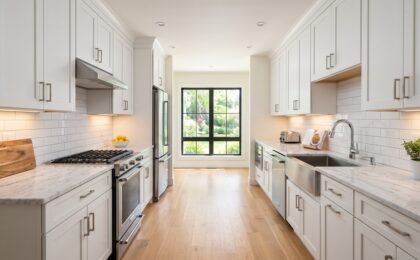
- Small Galley Kitchens: Gloss reflects the opposite wall, making a narrow galley feel twice as wide. (For more galley layout tips, see our guide to 10 Best Galley Kitchen Layouts).
❌ Never Use Glossy:
- Lower Cabinets: Unless you want to stare at dirty footprints and fingerprints every day.
- If you hate cleaning: If you don’t want to wipe your cabinets weekly, skip the gloss.
- If your walls are crooked: Gloss reflects the room. If your walls or ceiling are uneven, the reflection will make it obvious.
📐 Designing a Narrow Galley Kitchen?
Glossy cabinets can make a narrow galley feel twice as wide by reflecting the opposite wall. See our layout guide for the best storage and workflow setups.
View 10 Galley Kitchen Layouts →Where to Use Matte (And Where It Shines)
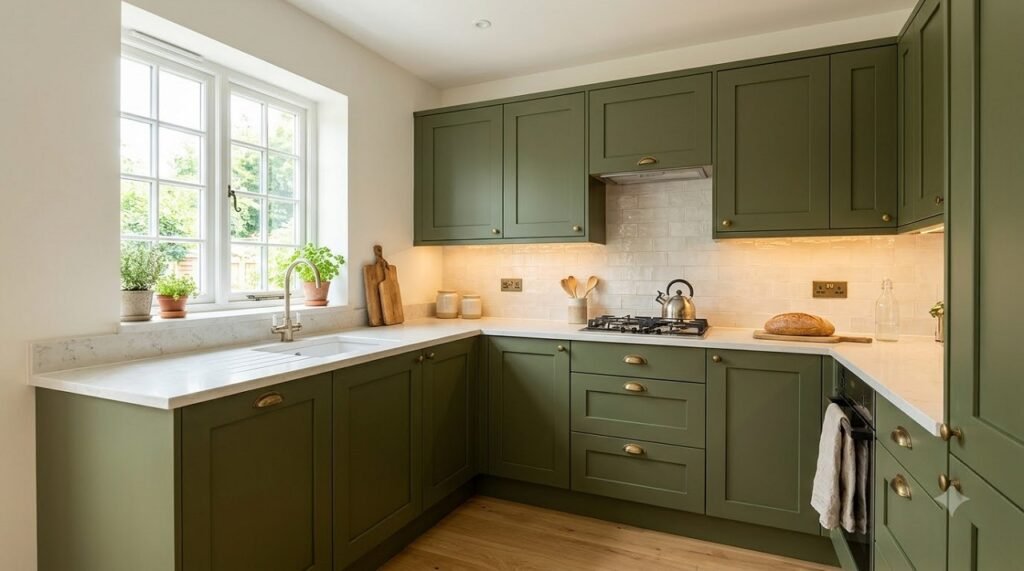
✅ Best Places for Matte:
- Lower Cabinets: Matte hides the scuffs and kicks that lower cabinets always get.
- Kitchens with Amazing Natural Light: If you have huge windows, matte cabinets will look rich and sophisticated without making the room feel dark.
- Two-Tone Kitchens: Matte lowers with glossy uppers are a perfect match.
❌ Never Use Matte:
- In dark, shadowy kitchens: If there is no light to bounce around, matte will make it feel like a dungeon.
- If you want a super sleek, modern look: Gloss usually wins for ultra-modern aesthetics.
The Hybrid Approach: The Best of Both Worlds

You don’t have to choose just one. The smartest strategy for a small kitchen is to use both.
The “Gloss Top, Matte Bottom” Rule:
Use high-gloss cabinets on the top half of the kitchen. This bounces light and makes the room feel taller. Use matte cabinets on the bottom. This hides all the scuffs, kicks, and splatters that happen at floor level.
Another option is to use glossy cabinets on the perimeter walls and a matte finish on the island or peninsula.
5 Common Mistakes When Choosing a Finish
- Choosing Gloss purely for the “size” illusion. If you hate wiping fingerprints, you will resent your glossy kitchen. Choose a light-colored matte finish and rely on lighting and paint to make the room feel big.
- Ignoring the light source. Don’t put matte cabinets in a dark kitchen. Don’t put glossy cabinets under harsh, bare bulbs (the glare will blind you).

- Using cheap gloss. Low-quality high-gloss thermofoil looks like plastic and peels at the edges. If you go gloss, invest in high-quality acrylic or lacquer.
- Forgetting the hardware. Glossy cabinets can look too “shiny” if you use chrome hardware. Use brushed metal or matte black to balance the look.
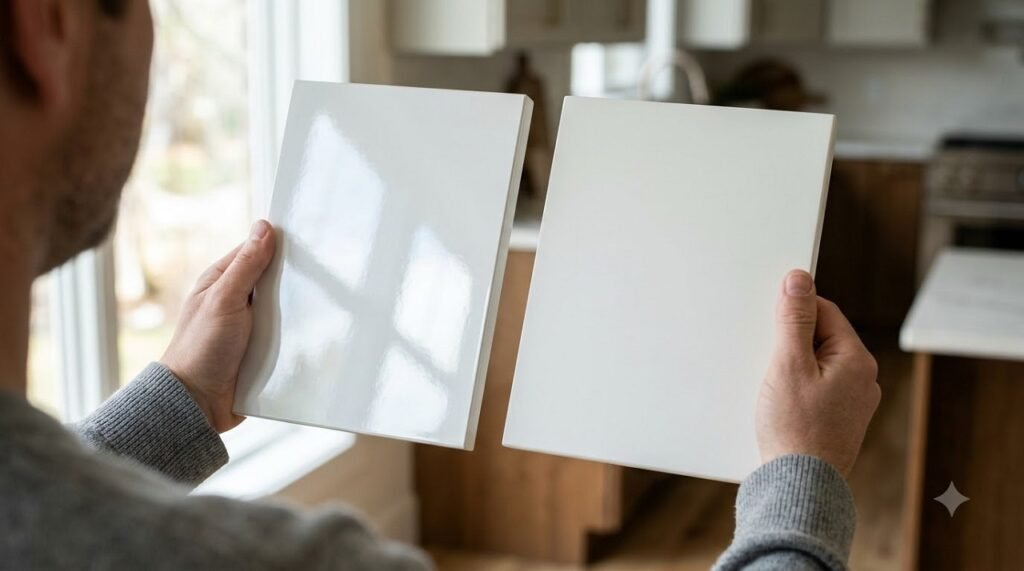
- Not ordering samples. Always order a physical door sample of both matte and glossy. Look at them in your kitchen, under your lighting, at different times of the day.
Frequently Asked Questions
Do glossy cabinets make a kitchen look bigger?
Yes. Glossy cabinets reflect up to 80% of the light that hits them. This bounces light into dark corners and reflects the room back at you, creating an illusion of depth and making the space feel larger and brighter.
What is better: matte or glossy?
It depends on your priorities. Glossy is better for reflecting light, making a space feel bigger, and easy cleaning. Matte is better for hiding scratches, offering a modern sophisticated look, and hiding scuffs on lower cabinets. A hybrid (gloss uppers, matte lowers) is often the best approach.
Do matte cabinets show fingerprints?
Less than glossy cabinets, but certain matte textures can still show fingerprints and grease. A high-quality matte lacquer or matte thermofoil is generally very good at resisting fingerprints.
Do glossy cabinets show scratches?
Yes. Glossy finishes highlight every flaw. Micro-scratches from cleaning cloths, rings, or pet nails can dull the finish over time. Matte finishes are much better at hiding these imperfections.
How do I clean matte kitchen cabinets?
Use a soft microfiber cloth and warm, soapy water. Avoid abrasive sponges or harsh chemical cleaners, as these can alter the matte texture. Dry them immediately to prevent water spots.
Conclusion
If you want the most light reflection, the physics is clear: Glossy wins. It bounces light, expands the visual space, and is incredibly easy to wipe down.
But a small kitchen isn’t just about physics; it’s about how you live. If you want a modern, sophisticated look and you don’t want to spend your life wiping fingerprints, Matte is a brilliant choice—provided you back it up with excellent lighting and a light paint color.
Here’s your quick action plan:
- Assess your light: Dark kitchen? Lean toward glossy or light-colored matte. Bright kitchen? Matte looks stunning.
- Consider the hybrid route: Glossy uppers and matte lowers.
- Test the texture: Order physical samples of both and look at them under your actual kitchen lighting.
- Choose quality: Don’t buy cheap gloss.
Choose the finish that fits your lifestyle, and your small kitchen will look beautiful, functional, and intentional.